
If you’ve never watched Formula 1 before and plan to tune in for the Miami Grand Prix this weekend, one of the first things you’ll encounter is qualifying. It happens Saturday, May 3, before Sunday’s main race, and it determines the grid — meaning who starts where when 20 cars line up for the Grand Prix. Here’s everything you need to know, plus the key storylines that make this weekend worth watching.
How F1 Qualifying Works
Qualifying is broken into three rounds, referred to as Q1, Q2, and Q3. Each session gives drivers a set amount of time to post the fastest lap possible around the circuit. Here’s how the elimination process works across all three rounds:
- Q1 (18 minutes): All 20 drivers run. The five slowest are eliminated and assigned starting positions 16 through 20.
- Q2 (15 minutes): The remaining 15 drivers run again. The five slowest are eliminated and start positions 11 through 15.
- Q3 (12 minutes): The final 10 drivers battle for the top ten grid positions, with the fastest lap earning pole position.
What Is Pole Position and Why Does It Matter?
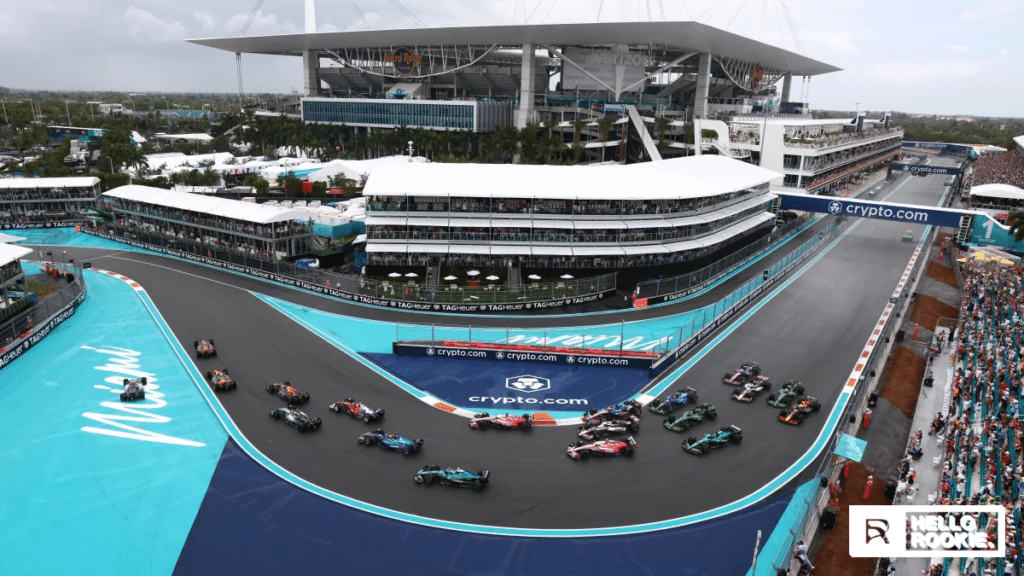
Pole position is the front spot on the grid — the reward for the fastest qualifying lap. It’s significant for a few reasons beyond just bragging rights. Starting at the front means clean air with no traffic to navigate, the ideal racing line into Turn 1, and statistically a much higher probability of winning the race. At the Miami International Autodrome, which winds around Hard Rock Stadium across 19 turns and 5.41 kilometers, overtaking is possible but not always easy. Pit strategy and track position matter greatly here, which makes Saturday’s qualifying session more than just a warm-up exercise.
The 2026 Miami Weekend Is a Sprint Format
This weekend features something a little different from a standard F1 race weekend. Miami is one of several sprint-format rounds on the 2026 calendar, which means the schedule is condensed and includes a Sprint Race on Saturday in addition to main race qualifying. The Sprint is a shorter, standalone race of roughly 100 kilometers with its own separate qualifying session called the Sprint Shootout that happens on Friday. Saturday’s main qualifying session — the one that sets the grid for Sunday’s Grand Prix — runs independently from the Sprint results. Even if a driver wins the Sprint, they still need to post a fast lap in Q3 to start up front on Sunday.
Who to Watch This Weekend
The championship battle heading into Miami is tight and involves familiar names for anyone who follows the sport. Here are the drivers to keep an eye on as qualifying approaches.
Kimi Antonelli, a 19-year-old Italian driving for Mercedes, leads the 2026 standings with 72 points. He has been remarkably composed for someone in only his first season, and a strong qualifying performance in Miami could extend his advantage over the field. His teammate George Russell sits second in the standings at 63 points, making the Mercedes garage itself one of the most compelling intra-team battles in F1 this year.
Charles Leclerc of Ferrari is third in the standings at 49 points, while Lewis Hamilton — who moved to Ferrari ahead of the 2025 season — is fourth with 41 points. Both Ferrari drivers need a strong Saturday to stay in contention. Meanwhile, McLaren’s Lando Norris and Oscar Piastri are capable of front-row threats at a circuit like Miami, where McLaren has shown strong pace in recent seasons.
The New Rules That Changed Everything
The 2026 season introduced the biggest regulation overhaul in years. One of the most visible changes is the replacement of DRS — the Drag Reduction System that allowed drivers to open a rear wing flap on straights — with an entirely new system called Active Aero. Under the new rules, cars automatically switch into what F1 calls Straight Mode on designated overtaking zones, which manages aerodynamic drag and downforce electronically rather than through a manual driver-controlled flap. This makes overtaking feel more integrated into the car’s engineering rather than a button-push advantage, and teams are still working to extract maximum speed from the new regulations.
Simple Tips for Watching Qualifying Live
Qualifying can feel chaotic if you’re watching for the first time, but a few things will help it make sense in real time. Watch the timing screens — most broadcasts display a live leaderboard with colored sectors, where purple indicates the fastest time overall and green indicates a personal best for that driver. The final minutes of Q3 are the most dramatic, as teams send drivers out on fresh tires for one last flying lap before the checkered flag drops. Sessions can be decided by hundredths of a second. For fans who enjoy adding a little extra interest to the weekend, live betting odds are available at sportsbooks throughout the session.
Why Miami Qualifying Matters for the Championship
This isn’t just any race weekend. Miami sits early enough in the calendar that the standings are still very much in flux, and with only 31 points separating leader Antonelli from Hamilton in fourth, every qualifying result ripples directly into the race result and the broader standings. A front-row lockout for Mercedes would be a major statement. A strong grid position for Leclerc or Hamilton could shift the Ferrari versus Mercedes narrative that is shaping this season. Saturday’s qualifying session will set the stage for a Sunday race that genuinely matters in the championship picture. For casual fans tuning in for the first time, this is an excellent weekend to start paying attention. If you’re also located in Florida and want to explore your options for betting on the race, Florida sports betting has expanded significantly in recent years.