
Michigan sports bettors avoided a significant hit to their wallets this year. When Governor Gretchen Whitmer unveiled her fiscal year 2027 budget proposal in February 2026, it included a new per-wager tax on sports betting modeled after a fee Illinois enacted the previous year. Republican leaders in the Michigan House rejected it immediately and made clear it would not appear in their version of the budget. The per-bet tax, which would have effectively raised the cost of placing a bet for every bettor in the state, is off the table for now — but the budget fight is far from finished.
What Whitmer Proposed
Whitmer’s plan was structured identically to the Illinois sports betting tax that took effect in 2025. Under the proposal, Michigan sportsbook operators would pay 25 cents per wager on their first 20 million bets placed in a year, then 50 cents per bet for every wager above that threshold. The state’s own budget documents acknowledged the Illinois comparison directly, noting “the same tax was enacted in Illinois last year.” The administration projected the fee would generate $38.8 million annually, earmarked for the state’s Medicaid Benefits Trust Fund.
The proposal was part of a broader package of tax increases aimed at closing an estimated $1.8 billion gap in state funding, much of it driven by changes to federal Medicaid support under the Trump administration’s budget legislation. Whitmer also proposed eliminating the ability of sportsbooks to deduct promotional bets from their taxable revenue, a separate measure projected to bring in an additional $21 million.
Why Bettors Would Have Felt It
Per-bet taxes are unique in how they affect the market. Unlike a percentage tax on operator revenue, which bookmakers can absorb to varying degrees, a per-wager fee scales directly with volume. Every single bet placed — regardless of size — carries the same flat cost to the operator. That structure is particularly punishing for smaller bets and for parlay legs, where operators process many transactions at relatively thin margins.
The real-world consequence, as seen in Illinois after that state’s per-bet tax took effect, is that operators pass some portion of the cost to bettors. Lines get slightly worse. Promotions shrink. Bonus offers become less generous. Bettors do not get a bill in the mail, but they feel the tax indirectly through reduced value on every wager they place. Illinois saw a measurable decline in total bets placed after its per-wager fee was implemented, which analysts attributed in part to the adjustment in bettor behavior when the market became less competitive. For Michigan sports bettors, that outcome would have been particularly significant given that the state currently has one of the lowest sports betting tax rates in the country, sitting at 8.4%.
How It Got Stopped
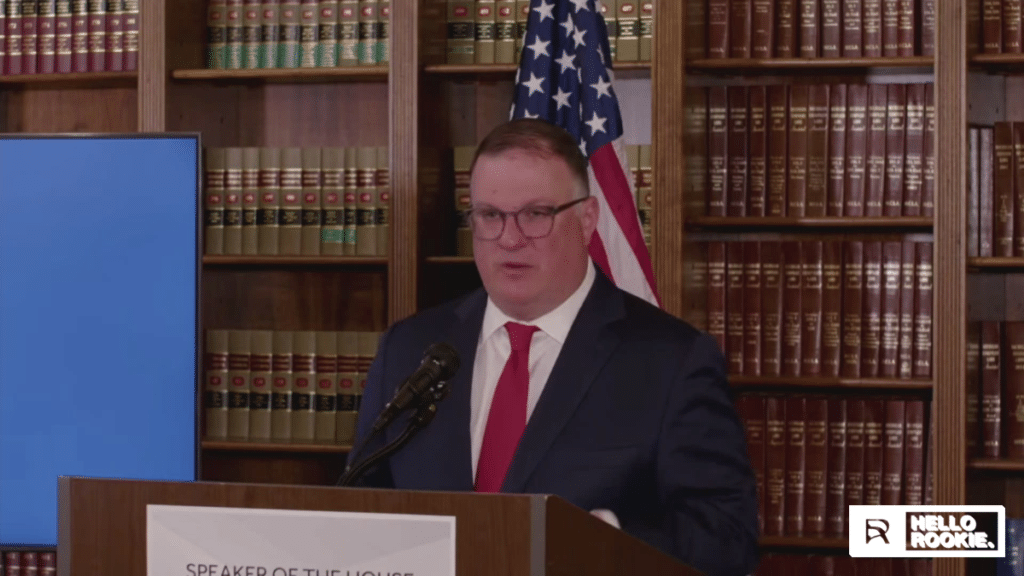
Republican House Speaker Matt Hall drew a hard line the same day Whitmer’s budget was released. He said flatly at a press conference that his caucus would not accept any tax increases in the final budget deal. “There will be no tax increases in this budget when we do this deal,” Hall said. The Sports Betting Alliance, which represents FanDuel, DraftKings, BetMGM, and Fanatics, added its own opposition, arguing that higher taxes would raise prices for Michigan residents and make it harder for licensed operators to compete with unregulated offshore alternatives.
Republicans control the Michigan House with a narrow majority, and Hall’s position sets up what is expected to be a prolonged budget negotiation heading into summer. The House is expected to release its own budget counter-proposal that excludes the gaming tax increases entirely, forcing the two chambers and the governor to negotiate toward a final deal before the October 1 constitutional deadline.
The Fight Is Not Over
The per-bet tax being absent from the House Republican budget does not mean it is permanently dead. Michigan’s budget process runs through the summer and fall, and the sports betting tax provisions could resurface in negotiations as part of a broader compromise. The Democratic-controlled Senate may include the per-wager fee in its version of the budget, setting up a direct conflict with the House that would need to be resolved before a final deal is signed.
Michigan remains a high-value sports betting market. Its current tax structure is favorable by national standards, and the state’s iGaming industry is among the most developed in the country. Any change to the tax structure — even a modest one — would ripple through the competitive landscape of apps and promotions that bettors in the state have come to rely on. For now, Michigan betting remains on solid ground, but the conversation is ongoing and the next budget deadline is approaching fast.