

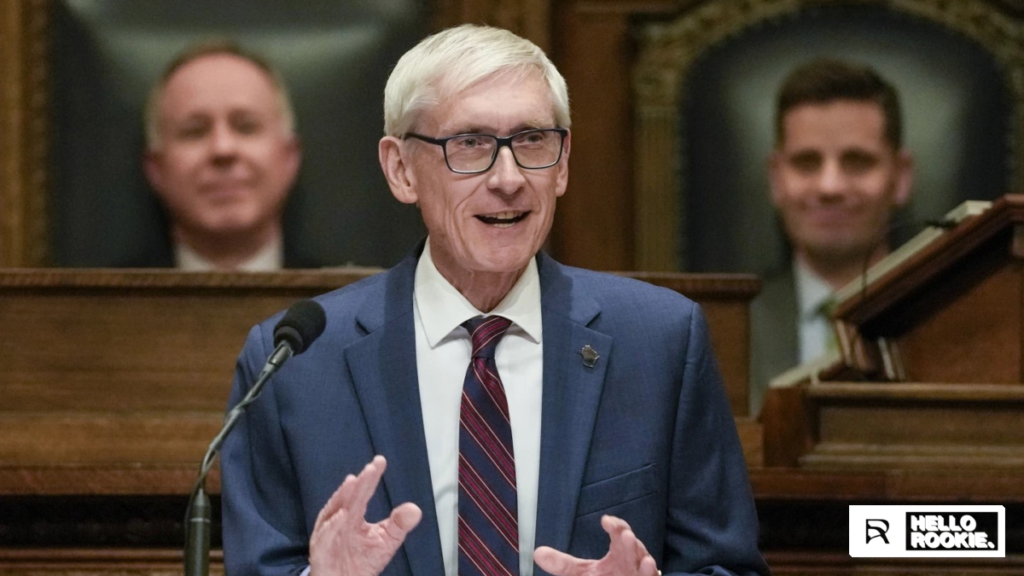
Wisconsin Governor Tony Evers signed Executive Order 294 on May 14, 2026, making Wisconsin one of five states to formally prohibit government workers from using insider information to profit on prediction market platforms. The order targets a gap in existing ethics law that had not been explicitly addressed before the rapid expansion of prediction market platforms into American financial life.
The executive order prohibits all Wisconsin state executive branch employees from disclosing or using any nonpublic information obtained through their public service to personally profit from participation in prediction markets, or to help spouses and family members do so. Violations can result in dismissal, referral to the Wisconsin Ethics Commission, or referral to law enforcement. The governor’s office was clear that the order was preemptive, noting that no specific incidents of insider trading by Wisconsin state workers had been identified.
Why Prediction Markets Are Drawing Government Attention
Prediction markets like Kalshi and Polymarket allow users to buy and sell contracts tied to the outcomes of real-world events. Those events increasingly include political decisions, regulatory actions, economic policy announcements, and other outcomes that government employees may have advance knowledge of before the public. The concern that government insiders could use privileged information to take positions on prediction market contracts ahead of public announcements prompted several state governors to act proactively.
California, Illinois, New York, and Maryland had already taken similar steps before Wisconsin acted. The U.S. Senate unanimously passed a rule barring senators and staff from trading on prediction market platforms. The cumulative effect is a growing institutional consensus that prediction markets present insider trading risks that existing securities laws were not designed to address, since most prediction market contracts are regulated as derivatives by the CFTC rather than as securities by the SEC.
“Maintaining public trust and confidence in our state government demands and depends upon transparency, accountability, integrity, and upholding the fundamental tenet of public service,” Governor Evers said in announcing the signing. He specifically cited the “growing proliferation” of prediction market contracts as the reason for issuing the order at this time.
Wisconsin’s Complicated Prediction Market Landscape
Wisconsin’s relationship with prediction markets extends well beyond the executive order. The state’s attorney general filed suit against Kalshi and other prediction market operators earlier this year, alleging they are facilitating illegal sports betting under Wisconsin state law. At the same time, Governor Evers signed legislation legalizing online sports betting in Wisconsin, but only through the state’s tribal gaming compact structure, excluding commercial operators and federally regulated prediction market platforms from the authorized sports wagering market.
The CFTC has pushed back against Wisconsin’s and other states’ efforts to regulate prediction markets, asserting federal preemption under the Commodity Exchange Act. That dispute is now working through federal courts and could become a landmark case for how federal and state jurisdiction over financial products tied to sports outcomes is eventually defined.
For sports bettors in Wisconsin, the practical impact is that legal sports betting is available through tribal-operated platforms, while prediction market platforms like Kalshi remain in a contested legal gray zone. The executive order adds another layer of official government concern about the prediction market sector without resolving the underlying jurisdictional dispute.
What Bettors Need to Know
The executive order applies only to government employees and has no direct effect on the ability of ordinary Wisconsin residents to use prediction market platforms. However, the accumulation of state-level actions against prediction markets, including executive orders, attorney general lawsuits, and legislative bans in other states, signals a challenging regulatory environment for these platforms in the near term.
Minnesota passed the first explicit state-level ban on sports-related prediction market contracts in May 2026, signed by Governor Tim Walz. That law prohibits prediction markets tied to sports outcomes in the state. If Wisconsin’s attorney general litigation succeeds, it could have a similar practical effect of cutting off prediction market access to Wisconsin residents, at least for sports-related contracts.
Sports bettors in Wisconsin who want to bet on games through fully licensed channels can find available options through sportsbook promotions and state-specific guides covering the platforms legally available in their jurisdiction. The legal landscape for prediction markets is evolving quickly and may look significantly different by the end of 2026.