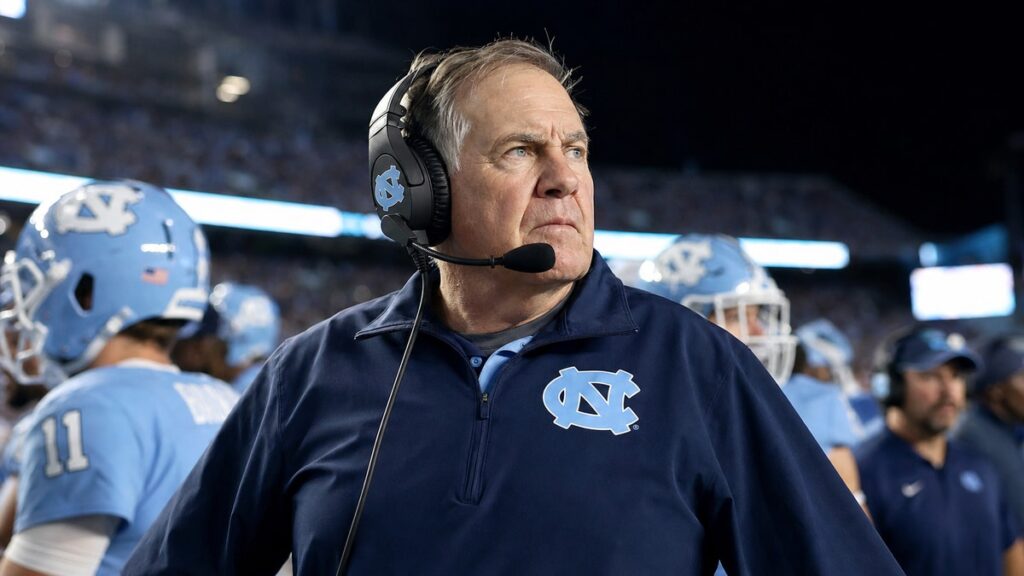


Rahm Emanuel, the former Chicago Mayor and potential 2028 Democratic presidential candidate, dropped a proposal on April 15 that has the online gambling industry buzzing — a 10% federal transaction tax on every bet placed at licensed online sportsbooks, casino apps, and prediction market platforms. Whether it ever becomes law is a very different question, but the fact that a serious national political figure is floating this idea as a policy centerpiece means it’s worth understanding exactly what it would mean for you as a bettor.
What Emanuel Is Actually Proposing
The core of the plan is straightforward: a 10% tax applied to every wager placed online. Emanuel pitched it in a Bloomberg-reviewed proposal and a Wall Street Journal interview as a way to fund what he’s calling an “American Innovation Fund.” The money would flow to areas like artificial intelligence, quantum computing, fusion energy, life sciences, and national security research — framing the tax as a direct investment in keeping the U.S. competitive with China. “I’m tired of people betting against America,” he said. “I want to bet on America.”
Emanuel estimates the tax could generate $30 billion to $50 billion per year, directed to agencies like the NIH and DARPA, both of which have seen significant budget cuts in the current political environment. He’s framed the proposal as part of a larger agenda that also includes banning federal employees from participating in prediction markets. It’s a political package aimed at drawing a contrast on the national stage as he weighs a 2028 presidential run in what is expected to be a crowded Democratic primary field.
Who Would Actually Pay This — and How?
Here’s where things get complicated, and where bettors need to pay close attention. As of now, it’s not clear whether the tax would be levied on operators’ gross gaming revenue, total betting handle (the total amount wagered), or individual transactions. That distinction matters enormously, and the ambiguity has been a central point of criticism from industry analysts.
Consider the math. The U.S. regulated online gambling industry generated roughly $27 billion in gross revenue in 2025. Getting from that number to Emanuel’s projected $30 to $50 billion in annual tax revenue would require the tax to be applied to total handle — the full dollar amount wagered — not just what operators keep after paying out winners. If you bet $100 on a game and a 10% federal transaction tax applies to that $100, the federal government takes $10 before the operator sees a dollar of margin. Analysts have noted bluntly that a handle-based tax at that rate would bankrupt most legal online sportsbooks operating in the United States today.
The state-level tax picture makes this even more fraught. Pennsylvania already captures as much as 54% of iGaming net revenue from operators and is on pace to collect nearly $1 billion in state tax revenue from online slots and sports wagering this fiscal year alone. Layering a federal tax on top of existing state obligations doesn’t create new revenue so much as it creates an unsustainable stacking problem for operators who are already tightly margined in competitive markets.
Does This Have Any Real Chance of Passing?
In its current form, almost certainly not — and certainly not soon. Emanuel holds no elected office. His proposal requires congressional approval, and there is currently no bill, no legislative vehicle, and no congressional sponsor attached to it. This is a campaign proposal, not pending legislation.
The gaming industry has substantial lobbying infrastructure and would oppose this aggressively. The American Gaming Association and state regulators would argue that the existing tax framework — spread across dozens of state-level structures — is already working, and that a federal layer would push bettors back toward offshore, unregulated books that pay no taxes at all. That argument has historically carried weight in gambling policy discussions, regardless of which party controls Congress.
That said, Emanuel’s proposal doesn’t exist in a vacuum. The broader political environment around gambling taxes is more active than it has been in years. A provision in the 2025 GOP tax and spending bill already caps gambling loss deductions at 90% of winnings starting January 1, 2026 — down from 100% — which the gaming industry has labeled a “phantom income” tax on bettors who lose money on net. Bipartisan bills to repeal that provision have been introduced but have stalled in committee. Emanuel’s proposal adds another data point to a growing conversation about whether the federal government should be extracting more revenue from the legal gambling sector.
What Bettors Should Watch For Right Now
For the immediate future, nothing changes at the sportsbook level. Emanuel’s federal iGaming tax has no path to becoming law in 2026, and it may never get one. But there are a couple of things worth tracking if you bet regularly on legal platforms.
The most near-term issue is the 2026 change to gambling loss deductions that already passed into law. Starting this tax year, you can only deduct up to 90% of your gambling winnings in losses — meaning if you bet $1,000 and win $1,000 back, the IRS could effectively tax you on $100 of phantom income. If you itemize deductions and place significant bets, talk to a tax professional about how this affects your 2026 return. The Emanuel federal tax is a longer-range storyline worth monitoring as the 2028 presidential cycle heats up, but it’s not coming to your sportsbook app anytime soon.