
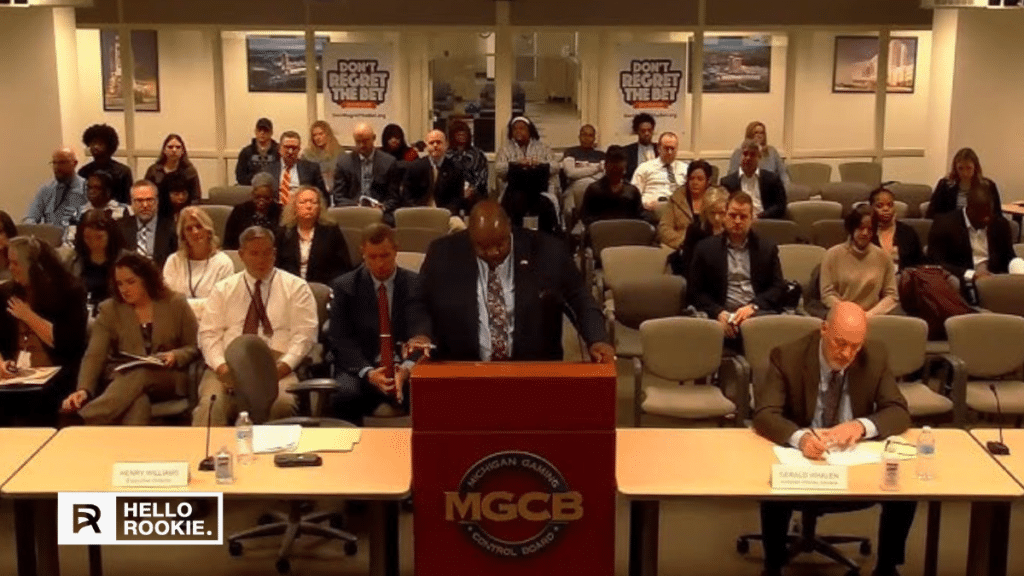
Michigan has staked out a leadership position in the national sports betting landscape with a move that puts the state well ahead of most of its peers. The Michigan Gaming Control Board has approved micro-betting features for a select group of licensed operators, making Michigan one of the first states in the country to formally regulate and authorize this format. The decision carries major implications for how bettors in the Great Lakes State engage with live sporting events — and it sets a precedent the rest of the industry is watching closely.
What Is Micro-Betting and Why Does It Matter
Micro-betting refers to wagering on discrete, short-duration outcomes that occur during the flow of a live sporting event. Rather than betting on which team wins a game, or even on a traditional in-play market like the next scoring drive, micro-betting allows wagers on individual plays, possessions, or even pitches as they happen in near-real time. Examples include betting on whether the next NFL play will be a run or a pass, whether a baseball pitcher will throw a strike or a ball, or whether a basketball possession will end in a made basket, a turnover, or a foul.
The format has been popular in European and Asian markets for years, where high-speed mobile betting infrastructure and regulatory frameworks have accommodated rapid-fire wagering. In the United States, the rollout has been slower, partly because the technology requirements are demanding — wagers need to be processed and settled in seconds — and partly because regulators in some states have been cautious about integrity risks associated with wagers that can be influenced by inside knowledge of what is about to happen.
Several states have moved to restrict or ban certain micro-betting products, particularly those tied to player performance proposition bets, in the wake of gambling integrity scandals. Michigan is moving in the other direction, choosing to formally regulate the format rather than prohibit it.
Michigan’s Approach: Regulate, Don’t Restrict
The Michigan Gaming Control Board has built one of the more rigorous regulatory frameworks for sports betting in the country. The MGCB reviews and approves all wager types before they can be offered to Michigan bettors, and it requires operators to participate in mandatory integrity monitoring programs that flag unusual or suspicious betting patterns. That infrastructure gives regulators the confidence to approve innovative products while maintaining oversight.
The approval of micro-betting features reflects that philosophy in action. Rather than taking a reactive stance — waiting for problems to emerge and then banning products — the MGCB has established guidelines for how micro-betting can be offered responsibly, with operator accountability built in from the start. The operators approved to offer micro-betting features in Michigan are required to use MGCB-approved suppliers, maintain comprehensive internal controls, and comply with all applicable change-control processes.
Michigan’s sports betting market is one of the most developed in the country. The state launched online wagering in January 2021 and now has 12 licensed internet sports betting operators, including DraftKings, FanDuel, BetMGM, Caesars, BetRivers, Fanatics, FireKeepers, theScore Bet, Four Winds, Eagle Casino and Sports, Hard Rock Bet, and Play Gun Lake. Combined iGaming and online sports betting gross receipts reached $313 million in February 2026 alone, a testament to the depth and maturity of the market.
What This Means for Michigan Bettors
For bettors in Michigan, the approval of micro-betting opens up an entirely new category of wagering that was previously unavailable through legal, regulated channels. The format is particularly appealing to recreational bettors who want to stay engaged with a game throughout its duration rather than simply checking a final score. A live NFL game becomes a continuous wagering experience, with dozens of micro-markets available on every drive. A baseball game offers betting opportunities on every at-bat.
The experience is also different from traditional in-play betting in terms of pace. Micro-betting is designed for mobile-first engagement, with wagers placed and settled quickly enough that the results feed back into the live viewing experience rather than interrupting it. The best implementations feel less like placing a bet and more like playing along with the game in real time.
From a responsible gambling standpoint, regulators and advocacy groups have raised legitimate questions about whether the rapid pace of micro-betting could accelerate problem gambling behaviors. The MGCB’s framework addresses this by requiring operators to build responsible gambling tools into micro-betting products, including deposit limits, cooling-off periods, and easy access to self-exclusion. These guardrails are standard in Michigan across all betting products, and their application to micro-betting is a requirement of the approval.
A Landmark Decision With National Implications
The MGCB’s decision to formally approve micro-betting puts Michigan in a small group of states willing to lead on product innovation rather than follow. Most state gambling regulators operate with a conservative default — if a wager type has not been explicitly approved, it is effectively prohibited. Michigan has consistently pushed against that tendency, maintaining one of the more permissive environments for wager types including college props, same-game parlays, and now micro-betting.
The national conversation around micro-betting is just beginning. As operators invest in the technology infrastructure to deliver low-latency in-play markets and as sports leagues become more comfortable with the format, demand will grow. States that have already built regulatory frameworks for micro-betting will be better positioned to offer a competitive product when that demand arrives at scale. Michigan, by moving now, has given its licensed operators a meaningful head start and its bettors access to a product category that will define the next phase of the sports betting industry.