
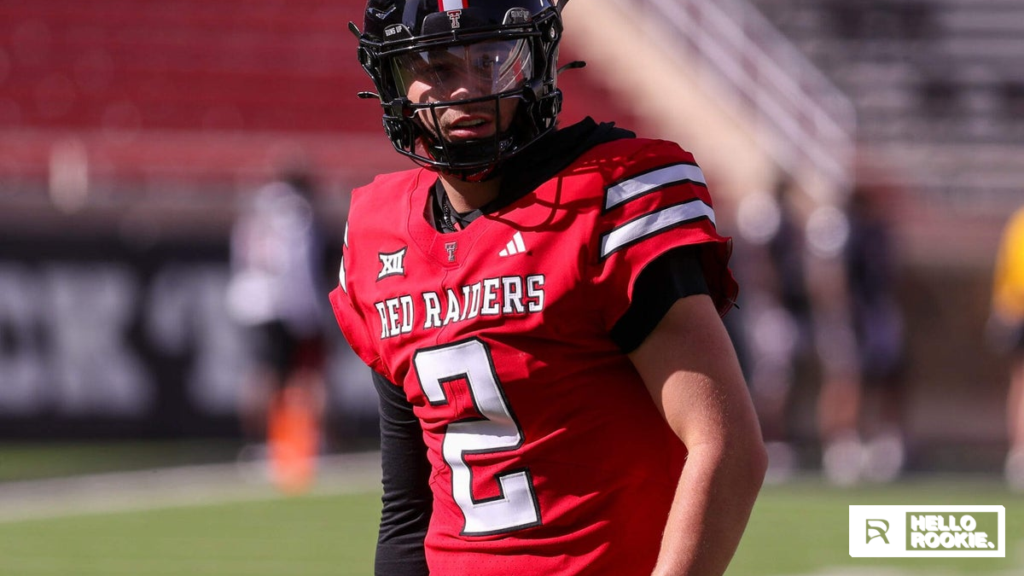
The NCAA is appealing the Texas court ruling that allowed Texas Tech quarterback Brendan Sorsby to retain his eligibility and return to the field despite having violated the organization’s rules on sports betting. A Texas judge granted Sorsby a preliminary injunction in early June that blocked the NCAA from enforcing penalties against him, permitting him to play in the 2026 season with what was expected to be a limited two-game suspension rather than a full-year ban. The NCAA’s decision to appeal challenges the legal reasoning behind that injunction and puts the case back in motion ahead of the fall football season.
Sorsby’s situation attracted national attention because it sits at the intersection of two issues that have become increasingly difficult for college athletics to navigate: the explosion of legal sports betting across the United States and the growing tendency of athletes and those connected to them to participate in it. The NCAA has long maintained strict prohibitions on any member of the college sports ecosystem wagering on college events, and violations have historically resulted in severe eligibility consequences.
Background on the Sorsby Case
Sorsby, a transfer quarterback who enrolled at Texas Tech, was declared ineligible by the NCAA following an investigation that found he had bet on college sports — a violation of NCAA bylaws. Sorsby went to court in Texas and argued that the eligibility penalties were disproportionate and that his right to continue competing should be protected while the legal questions were resolved. A Texas district court agreed and issued a preliminary injunction blocking the NCAA from enforcing its punishment during the litigation.
The injunction was notable because it represented a court directly overriding the NCAA’s enforcement process — something that has become more feasible in recent years as athletes have increasingly challenged NCAA authority through the legal system. The Sorsby case follows a line of legal challenges that have chipped away at NCAA autonomy, including the landmark Alston decision by the Supreme Court in 2021, which opened the door for athletes to receive education-related benefits.
The NCAA’s Appeal and Its Implications
By appealing, the NCAA is signaling that it believes the injunction was improperly granted and that the lower court erred in blocking the enforcement of its bylaws. If the appeal succeeds, Sorsby could be reinstated as ineligible, potentially affecting Texas Tech’s ability to use him in the 2026 season. If the appeal fails, it would further erode the NCAA’s practical ability to enforce its gambling rules against athletes who are willing to fight back through the courts.
The broader stakes extend well beyond Sorsby himself. College athletics has grappled with a sharp increase in gambling-related investigations since sports betting was legalized in a growing number of states after 2018. Multiple high-profile cases have involved college athletes, coaches, and associated parties. The NCAA’s gambling prohibition exists in significant tension with a legal environment in which sports betting is advertised heavily, available on mobile devices to anyone of legal age, and conducted publicly on platforms that often include college sports markets.
Critics of the NCAA’s current approach argue that its gambling rules were designed for an era when sports betting was largely illegal and stigmatized, and that the organization has not adequately adapted those rules to the new reality of widespread legalized wagering. Supporters of strict enforcement contend that protecting the integrity of college competition requires zero tolerance, particularly for athletes who could theoretically influence outcomes.
What to Watch
The timeline for the appeal will determine whether Sorsby is available at the start of the season. If the appellate court moves quickly and rules against the injunction before fall camp opens, Texas Tech faces real uncertainty at the quarterback position. If the appeal is not resolved by the time the season begins, Sorsby is likely to continue playing under the injunction’s protection until a final ruling is issued. The case has drawn attention from legal observers, college athletics administrators, and gambling policy experts, all of whom see it as a potential inflection point in how the NCAA’s gambling rules are enforced going forward. For bettors tracking sports betting legality and its intersection with college sports, the Sorsby case represents a real-world test of where the lines are drawn.