
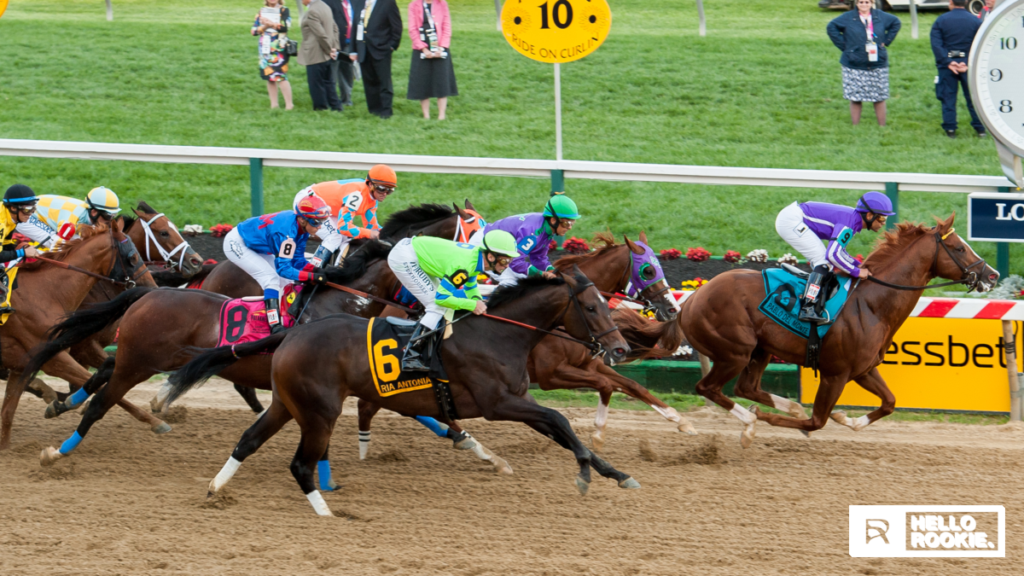
Horse racing may be sitting on firmer legal ground than any other form of regulated wagering as prediction market platforms push deeper into sports outcomes across the country. At the Racing and Gaming Conference held Aug. 10 in Saratoga Springs, N.Y., gaming law attorney Bill Gotimer told attendees that pari-mutuel wagering enjoys a layer of federal protection that sports betting operators and Native American gaming outlets currently lack.
The distinction comes down to a single piece of legislation: the Interstate Horseracing Act of 1978. The IHA governs interstate commerce for pari-mutuel wagers on horse racing and requires approval from host racing associations and state regulators before any wagers can be accepted on a given event. According to Gotimer, that structural requirement gives racetracks and horsemen a seat at the table that other stakeholders in the gaming industry don’t have when it comes to who can take action on their product.
Why the IHA Gives Racing an Edge
The broader fight over prediction markets has centered on jurisdiction. Platforms like Kalshi and Polymarket argue they aren’t gambling operators at all, but regulated exchanges offering “event contracts” under the oversight of the Commodity Futures Trading Commission. The CFTC has backed that position aggressively, suing roughly a dozen states so far in 2026 — including Illinois, Connecticut, Arizona, Rhode Island, and Kentucky — arguing that its authority under the Commodity Exchange Act preempts state gambling law entirely. The Third Circuit sided with Kalshi in April, while the Ninth Circuit appeared more sympathetic to Nevada’s separate ban during oral arguments the same month, leaving federal courts split on the underlying question.
Gotimer said racing’s position is different because the IHA is itself a federal statute, which makes the CFTC’s preemption argument considerably harder to sustain. “It’s been around since 1978, and what it effectively does is it gives the racetracks and racehorse owners a seat at the table for any discussion as to who can accept wagering on their product,” Gotimer said at the conference. “It probably did not foresee prediction markets as we have now, but it did foresee the fact that [tracks and participants] had an economic stake in who could accept wagers.”
That framing effectively pits one federal law against another, rather than pitting federal oversight against state gambling statutes — the fight playing out in most other prediction market litigation nationally. “So I think there is a legal block right now on the prediction markets taking wagering action or ‘contract action’ on the outcome of races,” Gotimer said.
Derby Attempt Shows the Line Being Tested
The theory has already been tested. Gotimer said some prediction market platforms attempted to offer contracts tied to the outcome of this year’s Kentucky Derby before backing off. Attorney Kim Copp, who moderated the panel, said Polymarket briefly listed action on the Derby but pulled it down after Churchill Downs Inc. intervened. “For the time being [prediction market propositions on specific races] is illegal because there’s a federal law that is not subject to preemption by another federal law,” Copp said.
Panelists noted the line isn’t absolute. Prediction markets could still likely offer legitimate contracts on outcomes like which jockey finishes the year with the most earnings or who wins an Eclipse Award — situations that fall outside the IHA’s direct scope over wagering on individual races. Some panelists suggested racing stakeholders might even welcome those markets if the sport saw a financial benefit from them.
Native American Gaming Makes a Similar Case
Racing isn’t alone in leaning on existing federal law for protection. Derril Jordan, an attorney representing Native American gaming interests, argued that tribal gaming compacts also carry federal backing that prediction markets are infringing upon. Jordan noted the irony of his position, given that tribal gaming has often found itself at odds with state regulators in the past. “I’ve spent most of the time fighting states, now I find myself cheering them on,” Jordan said.
The broader legal picture remains far from settled. Copp told the panel she has tracked 45 active cases nationally involving prediction markets suing states, states suing prediction markets, or the CFTC suing states directly on behalf of the exchanges. Dan Ullman, a crypto, fintech, and gaming adviser who spent 16 years at the CFTC, declined to offer a prediction on how regulators might eventually thread the needle between state and federal oversight. “If it were simple,” Ullman said, “there wouldn’t be so much litigation over it.”
What It Means Going Forward
For now, racing’s carve-out appears more durable than the protections available to traditional sports betting operators, many of whom are watching the same jurisdictional battle unfold in court after court with no unified outcome yet. Bettors who want to follow how the shifting landscape affects mainstream sports wagering can track live sports betting odds as new markets and regulatory decisions continue to shape the industry. As litigation drags on in multiple circuits, racing’s status as a federally protected pari-mutuel product may prove to be one of the more stable corners of American wagering while everything else around it remains in flux.