
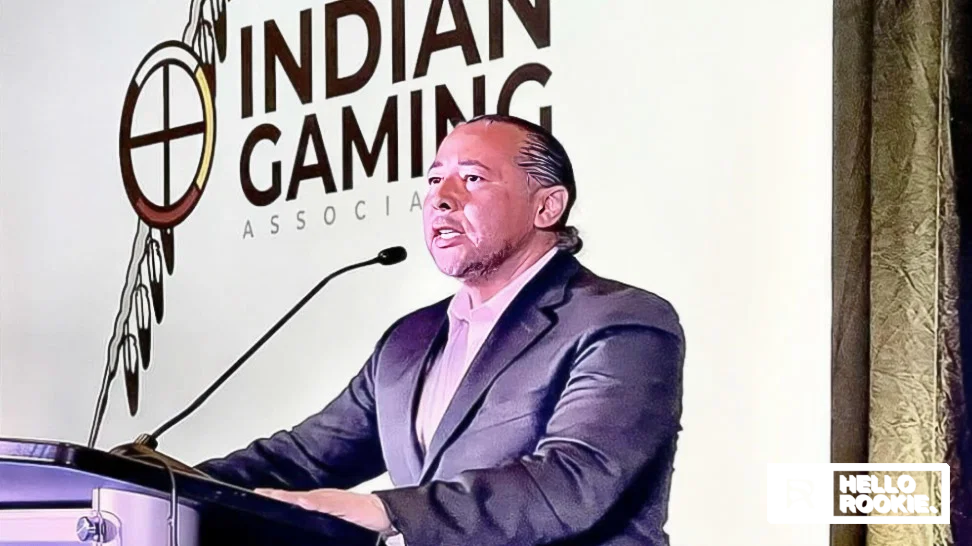
Tribal gaming leaders are pressing U.S. senators to amend the CLARITY Act, a sweeping cryptocurrency market-structure bill, to explicitly bar federally regulated prediction markets from offering contracts tied to sports and casino-style outcomes. The Indian Gaming Association said tribal representatives spent this week meeting with senators and congressional staff during its Summer Legislative Summit in Washington, D.C., as lawmakers work to finalize the legislation.
The push comes amid an escalating legal and political fight over whether prediction market operators can offer sports wagering-style products nationwide by classifying them as federally regulated derivatives rather than state-licensed sports bets. That dispute has already spilled into courtrooms across the country, and tribal nations argue the CLARITY Act could tip the scales even further in favor of the platforms.
What the Indian Gaming Association Is Asking For
IGA is seeking two specific changes to the bill. The first would prohibit federally regulated prediction markets from offering contracts based on sports or casino-style outcomes. The second would add language clarifying that the legislation does not preempt the Indian Gaming Regulatory Act or other tribal, state and federal gaming laws.
“Indian Country is united because this is one of the greatest threats tribal government gaming has faced in a generation,” IGA Chairman David Bean said. The CLARITY Act itself is not a gaming bill — it is designed to build a federal regulatory framework for digital assets, splitting oversight between the Securities and Exchange Commission and the Commodity Futures Trading Commission. But IGA argues that without additional safeguards, the legislation could be leveraged by cryptocurrency-based prediction markets to bolster their argument that sports contracts fall outside state and tribal gaming law entirely.
The association warned the bill, as currently written, “could unintentionally allow cryptocurrency-based prediction markets to expand online gambling nationwide.” Bean was more pointed about what tribes see as the stakes, saying that platforms rely on “the fiction that sports bets are ‘swaps'” in a way that “undermine[s] tribal sovereignty, violate[s] the government-to-government agreements tribes have built with their states, and threaten[s] the revenues our tribal nations depend on to fund healthcare, education, housing, public safety, language preservation, and essential government services.”
A Fight Already Playing Out in Federal Courts
Sports event contracts have become one of the most contentious flashpoints between prediction market operators, state regulators and tribal gaming interests over the past year. Tribes argue the products function like traditional sports wagering and threaten gaming rights secured under federal law and existing tribal-state compacts. Three California tribes recently asked the Ninth Circuit to block Kalshi from offering sports contracts on their lands, contending that federal commodities regulation does not override IGRA or tribal authority over gaming. Similar cases remain pending in Wisconsin and New Mexico.
Those court fights sit alongside a broader wave of litigation between prediction market platforms and state gaming regulators in Nevada, Massachusetts, Tennessee, New Jersey and elsewhere, with courts reaching inconsistent conclusions on whether sports event contracts are legally distinct from sports betting products offered through licensed sportsbook operators. That fractured legal landscape is part of why tribal leaders are now focused on shaping the CLARITY Act directly, rather than relying solely on the courts to settle the question.
IGA’s legislative campaign did not start this week. The organization joined the American Gaming Association earlier this year in urging Congress to prevent sports betting and casino-style gambling from being offered as event contracts through pending cryptocurrency legislation. That effort expanded in February with a congressional briefing that brought together tribal leaders, the National Congress of American Indians, commercial gaming groups and consumer advocates, signaling a broader coalition forming around the issue.
What Happens Next
Senate negotiators are now working to combine separate market-structure measures previously advanced by the Banking and Agriculture committees into a single bill. Several issues remain unresolved beyond the gaming carve-out tribes are seeking, including ethics restrictions for elected officials with cryptocurrency holdings, protections for decentralized-finance developers and limits on stablecoin rewards programs.
Supporters of the legislation are hoping for Senate action before the chamber’s summer state-work period begins on August 10, though the bill still faces a difficult path to securing the 60 votes needed to overcome a filibuster. For sports bettors and the broader industry, the outcome could determine whether prediction market operators continue expanding sports contracts into new sports betting states under a federal framework, or whether Congress moves to draw a firmer line between commodities regulation and traditional sportsbook oversight. Given how central the “swaps versus sports bets” argument has become in litigation nationwide, how the CLARITY Act ultimately addresses — or ignores — the issue could shape the next phase of the fight far beyond this single bill.