
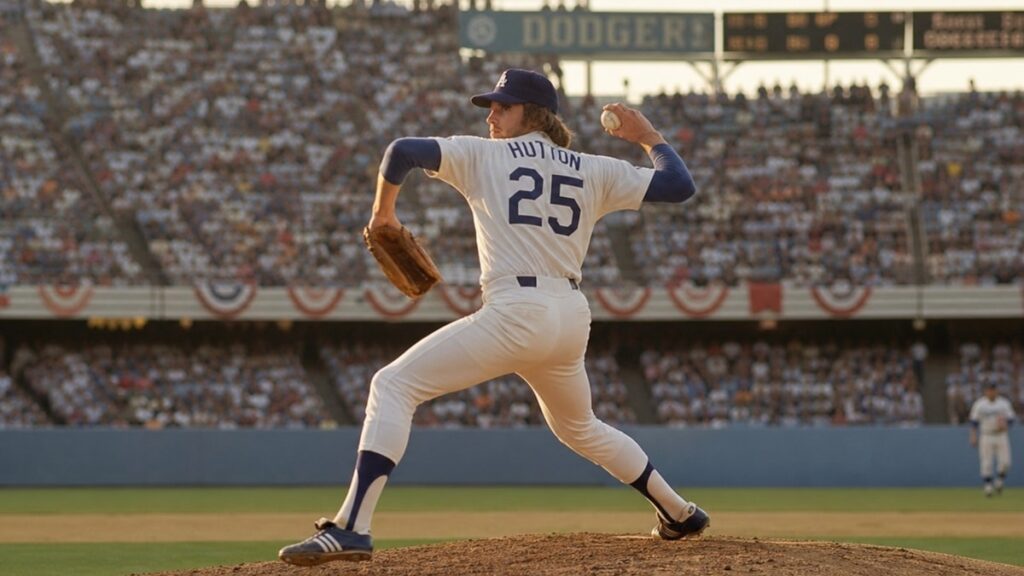
Tommy John, the left-hander whose name became permanently attached to the elbow surgery that saved his career and thousands of others since, has died at 83. The Los Angeles Dodgers confirmed his death Sunday, and his agent Mike Maguire told CBS News John passed away Saturday at his home in Bradenton, Florida, surrounded by his wife Cheryl and family, after recently being in hospice care.
John pitched 26 major league seasons between 1963 and 1989, finishing with a 288-231 record and a 3.34 ERA across 4,710 innings — the third-most seasons ever thrown by a big league pitcher, trailing only Cap Anson and Nolan Ryan. He made his debut with Cleveland in 1963, starred for the White Sox from 1965-71, then found his greatest success with the Dodgers, going 87-42 with a 2.97 ERA and helping Los Angeles to back-to-back World Series appearances. He also had two stints with the Yankees, plus time with the Angels and Athletics, retiring at age 46 with more career wins than all but one non-Hall of Famer in the modern era.
The Surgery That Changed Baseball Forever
None of that career longevity happens without what came next. In 1974, John tore the ulnar collateral ligament in his pitching elbow during a game against the Montreal Expos — at the time, a career-ending injury for any pitcher. Dodgers team physician Dr. Frank Jobe offered an experimental fix: replace the torn ligament with a tendon from elsewhere in John’s body. On September 25, 1974, Jobe performed the four-hour procedure, giving John what he estimated was roughly a 1-in-100 shot at a full recovery. John missed the entire 1975 season rehabbing, but returned in 1976 and pitched 14 more years, winning 164 more games — just one fewer than Sandy Koufax won in his entire Hall of Fame career, a stat John liked to point out himself.
“Tommy John surgery,” as it’s now known worldwide, has since become one of the most common procedures in professional sports. An estimated one-third of all MLB pitchers have undergone some version of it, and success rates that Jobe once guessed at 1-in-100 have climbed above 85 percent. Three Hall of Famers — Paul Molitor, John Smoltz and Billy Wagner — had the surgery during their careers, and Jacob deGrom became the first starter ever to win a Cy Young after going through it, doing so twice. Bettors tracking pitcher health and workload all season can find the latest arm-injury fallout reflected in MLB odds as teams adjust rotations around recovery timelines.
A Farewell Before the End
John’s death came just over a week after he shared an emotional goodbye letter with fans, released by the Yankees around the club’s Old-Timers’ Day on August 8. John, who was unable to attend in person while receiving hospice care, thanked the organization, the Steinbrenner family and the fans who “followed me throughout my 26-year career.” He also singled out the man who made the rest of his career possible. “Thanks to Dr. Jobe, who saved my arm and made it possible for me to continue pitching,” John wrote, adding that the surgery “has since gone on to save the careers of countless pitchers, including many of the very best in the game today.” Dodgers president and CEO Stan Kasten echoed that sentiment in a statement Sunday, saying John’s “courageous role in becoming the first to have surgery that would go on to bear his name can’t be overstated” and that his impact “will be felt by ballplayers of all ages for generations to come.”
The timing carries extra weight this week. Reds ace Hunter Greene just underwent his second Tommy John surgery on Wednesday, a procedure that will keep him out well into 2027, while Tigers rookie Jackson Jobe — coincidentally sharing a surname with the surgery’s inventor — made just his second big league start this past weekend since returning from his own Tommy John procedure last year. Both are living proof of exactly what John and Dr. Jobe started more than five decades ago: a surgery that no longer ends careers, but extends them. John finishes his own as a four-time All-Star with the second-most wins among modern-era pitchers outside the Hall of Fame, and as the answer to a question no one had ever needed to ask before 1974 — what happens after a pitcher’s elbow gives out. He is survived by his wife and three children, Tommy, Travis and Tamara.