
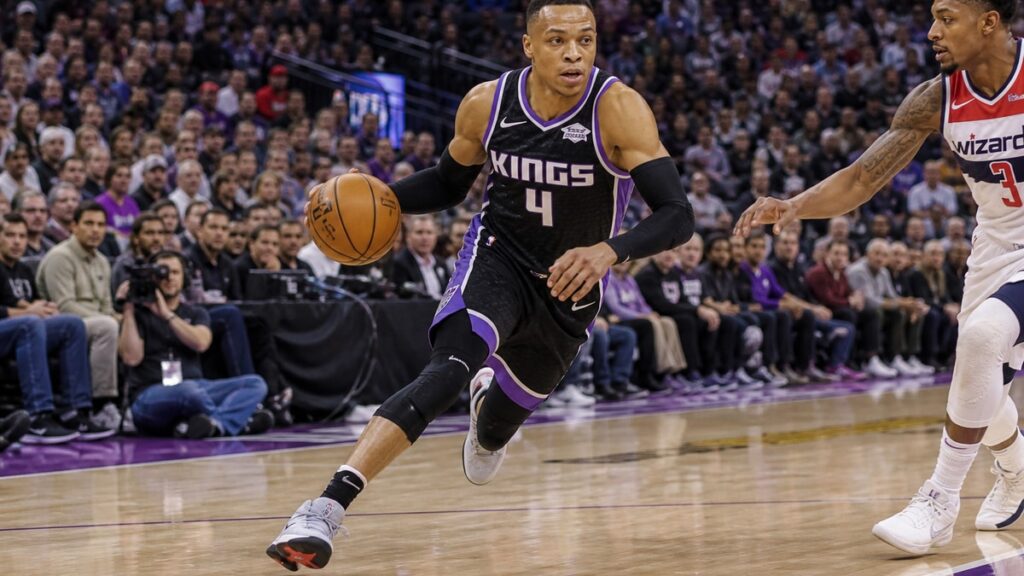
Russell Westbrook is walking away from the NBA. The nine-time All-Star announced his retirement Wednesday in a farewell video narrated by actor Michael B. Jordan, closing the book on an 18-season career that included stops with seven different franchises and a single unanimous truth: nobody in league history has ever done what he did on a nightly basis.
Westbrook, who turns 38 in November, spent his final year in Sacramento after a journey that took him from Oklahoma City to Houston, Washington, the two Los Angeles teams, Denver and finally the Kings. He had chances to keep playing, according to reporting on his decision, but chose to step away on his own terms rather than chase a bench role deep into his late 30s.
From Thunder Rookie to the League’s Triple-Double King
Drafted fourth overall by Oklahoma City in 2008 out of UCLA, Westbrook spent his first 11 seasons anchoring the Thunder alongside Kevin Durant, reaching the 2012 NBA Finals before Miami ended that run. The signature year came in 2016-17, when Westbrook averaged 31.6 points, 10.7 rebounds and 10.4 assists across a full season, the first player to average a triple-double since Oscar Robertson in 1961-62. He piled up a then-record 42 triple-doubles that year and walked away with the MVP trophy.
He finishes his career as the NBA’s all-time leader in triple-doubles with 209, ahead of Nikola Jokic. Westbrook ranks 14th all-time in scoring with 27,176 points, fifth in assists with 10,351, and 14th in steals. Beyond the individual numbers, he collected nine All-Star nods, two All-Star Game MVPs, nine All-NBA selections, a spot on the NBA’s 75th Anniversary Team, and Olympic gold with Team USA in 2012. In Sacramento last season, he still contributed 15.2 points, 6.7 assists and 5.4 rebounds across 64 games, a respectable close for a player who spent nearly two decades playing at a frantic, physical pace few could sustain.
Betting Markets Already Treat Cooperstown-Level Enshrinement as a Formality
There’s no championship on Westbrook’s resume, which will fuel debate over where exactly he lands among the greatest guards of his era. But on the one market that actually tracks his post-career fate, the number is about as lopsided as it gets: Basketball Reference’s Hall of Fame probability model has Westbrook at a 99.9 percent lock, putting him in the same tier of near-certainty as any first-ballot honoree from the last two decades.
That kind of figure reshapes how sportsbooks and prediction markets will likely price any future Hall of Fame class futures once Westbrook becomes eligible, his resume of an MVP, nine All-Star appearances and the all-time triple-double record leaves essentially no argument space for longshot value the way borderline candidates sometimes generate. It also closes the book on any lingering will-he-sign-somewhere speculation that occasionally moves free-agency and roster-construction markets late in the summer; with Westbrook officially off the board, teams that had been linked to a low-cost, savvy veteran point guard now shift their offseason calculus elsewhere. For a career built on chaos, deflections and relentless motor, the market’s read on his legacy is refreshingly simple: this is a first-ballot Hall of Famer, full stop.