

The flex spot wins and loses fantasy leagues, and this offseason’s board says the same about your kicker and defense picks if you’re punting them too far down your board.
Quick take:
- Top name: Jahmyr Gibbs
- Why: He’s the clear RB1 on flex-only boards, ahead of even the elite receivers.
- The number to watch: Rookie running back Jeremiyah Love is already flex-relevant as a late-second-round pick after landing the Arizona Cardinals’ feature role.
Flex rankings this time of year are really a running back/wide receiver/tight end blend, since most standard leagues let you start any of the three there. The gap between the elite tier and everyone else has been shrinking as more offenses spread work around, which makes the deep sleepers below more valuable than usual. And unlike years past, kicker and defense drafting has actual signal behind it this summer — some teams have real edges built on scheme, not just name recognition, the same way sharp bettors lean on NFL odds to spot situational value before the field catches on.
The Flex Studs Everyone Agrees On
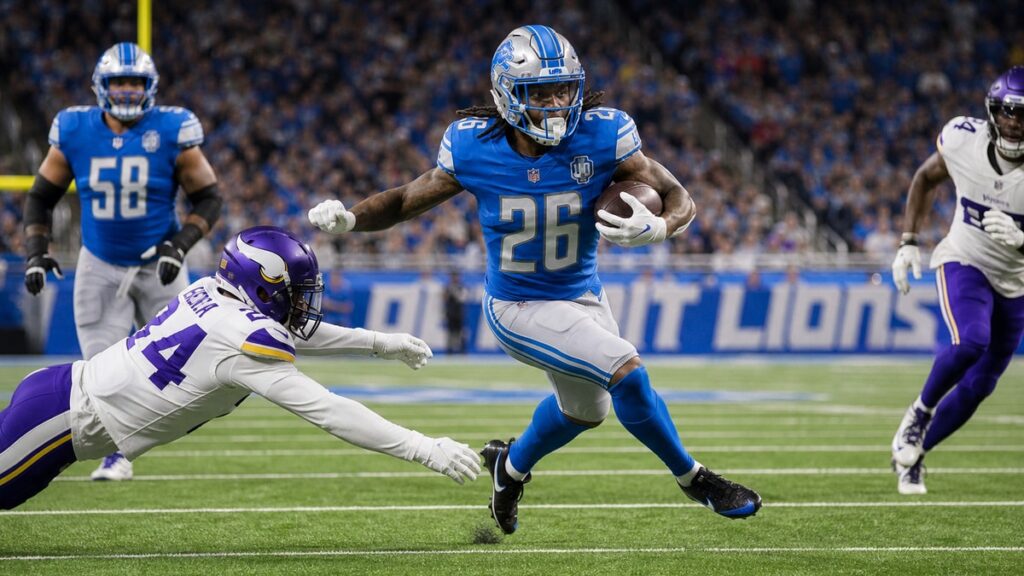
Jahmyr Gibbs sits at the top of the flex-only consensus board, and it isn’t particularly close. Detroit’s offense funnels touches his way in the passing game as much as on the ground, which is exactly the profile flex-spot managers should be hunting. Bijan Robinson and Jonathan Taylor round out the top tier at running back, with Taylor coming off a season that reestablished him as a workhorse in Indianapolis’s run-heavy attack.
At receiver, Puka Nacua and Ja’Marr Chase headline the group, both locked into true WR1 usage on offenses that are going to throw the ball 30-plus times most weeks. Jaxon Smith-Njigba has also climbed into that conversation after establishing himself as Seattle’s primary target. If you’re picking a flex option in the first two rounds, this is the tier you’re drawing from — the drop-off after these names is real.
The Mid-Round Names Worth Targeting
Once the elite tier is gone, the board flattens out fast, and that’s where research pays off. Chase Brown has emerged as a legitimate flex piece in Cincinnati’s backfield, while Jeremiyah Love — the Cardinals’ rookie back — is already being treated as a late-second or early-third-round pick after landing the clearest path to touches of any rookie runner this year. Rashee Rice and Zay Flowers both offer WR2-with-upside profiles if you need bodies in that WR15-25 range.
DJ Moore, now the unquestioned No. 1 option in Buffalo’s passing game, is being described as a legitimate bargain at his current price.
Moore reuniting with an offense that already knows how to feature him is the kind of situational fit that turns a WR3 price tag into WR2 production. Don’t overthink it if he’s still sitting there in the middle rounds.
Deep-League Flex Values Worth a Late Pick
This is where drafts are actually won. Tre Harris is locked into a starting role for the Chargers in his second season and is going in the 190s overall — essentially free. Jayden Higgins has quietly become one of the more buzzed-about names in a crowded Houston receiver room, with a mid-130s ADP that undersells his target share. And at tight end, Mark Andrews is being drafted as low as the 120s now that Isaiah Likely is gone from Baltimore, which should be enough on its own to lock him in as a low-end TE1.
Speculative, but worth monitoring: if Zachariah Branch carves out a bigger role in Atlanta’s passing game as his rookie year progresses, he could turn into one of the better free-agent adds of the season.
Kicker Rankings: Draft Volume, Not Names
Kicker remains the position where drafting for offensive environment beats drafting for name recognition, and this year’s consensus tiers back that up clearly. Brandon Aubrey, Ka’imi Fairbairn, Cameron Dicker, and Cam Little headline the top tier — all four kick for offenses that move the ball well enough to generate consistent scoring chances, even if some of those attempts come from distance rather than the end zone.
Jason Myers, Eddy Pineiro, and Tyler Loop make up a solid second tier. Loop is a name worth watching in Baltimore given how often that offense stalls in scoring range and needs a leg to bail it out. If you’re punting kicker to the last round, target whichever of these names is still on the board rather than reaching for a bigger name attached to a stagnant offense.
Defense/Special Teams: The Sneaky-Deep Board
The Houston Texans, Denver Broncos, Seattle Seahawks, and Los Angeles Rams headline this year’s DST consensus rankings, and the common thread is obvious — all four pair disruptive fronts with secondaries built to create turnovers. The Philadelphia Eagles, New England Patriots, Minnesota Vikings, and Jacksonville Jaguars form a strong second tier just behind them.
The gap between the DST1 and DST8 this year is smaller than usual, which means streaming by matchup is a completely viable strategy if you don’t want to spend a mid-round pick here.
Don’t feel pressure to reach for Houston or Denver on draft day if the price gets bid up. Any of the top-eight defenses will produce weekly, and there’s enough depth in this year’s DST class to stream matchups if you’d rather use that roster spot elsewhere early. If you’re tracking how the board moves as the season nears, the futures market often tips which offenses and defenses the books expect to carry weight.
The Bottom Line
Build your flex around the elite tier if you can afford it, but don’t panic if you miss out — this year’s mid-round and deep-sleeper values are unusually strong across all three skill positions. Kicker and defense both reward drafting for situation over name value.
- Target Jeremiyah Love, DJ Moore, and Tre Harris as flex value at their current ADP
- Draft kicker and defense from the top-four tier in each, but don’t reach — the depth is real
Do your homework on the mid-rounds this year — that’s where this draft class separates winning rosters from the rest of the league.


