
The SEC’s presidents, chancellors and athletic directors finalized a set of specific, stiff penalties on Wednesday for any member school that fields a former professional athlete, and one school pointedly declined to sign off on them. LSU abstained from the Wednesday vote, turning what had been a unanimous conference stance into a 15-0 approval with a single, conspicuous absence.
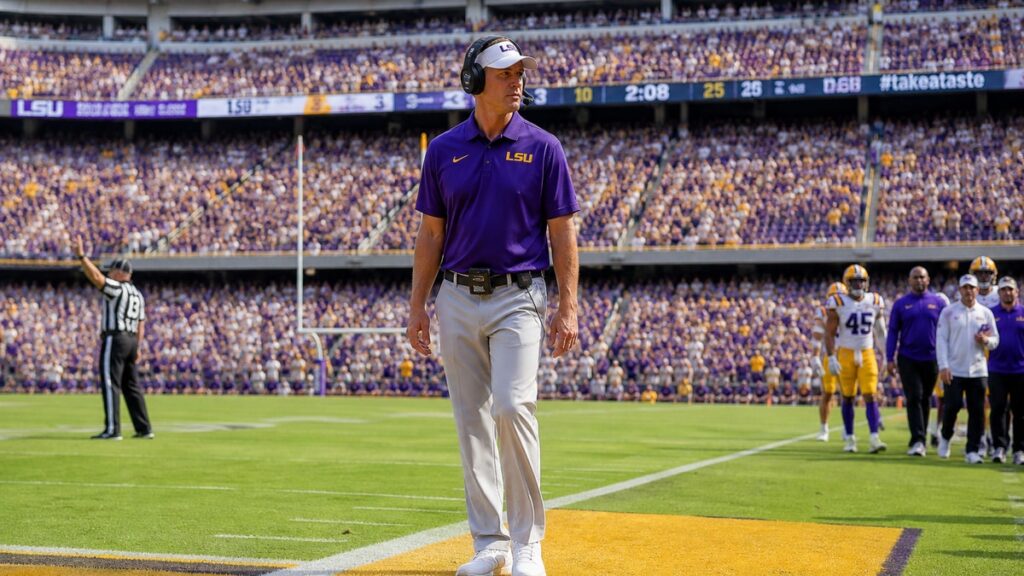
The abstention lands one day after LSU joined every other SEC school in a unanimous 16-0 vote banning athletes with pro experience from returning to college rosters altogether. That contradiction — supporting the ban outright on Tuesday, then sitting out the vote on how to punish violators on Wednesday — has become the story in Baton Rouge, where head coach Lane Kiffin has spent the past week actively recruiting two players the rest of the conference just agreed to lock out.
What the SEC actually approved
The penalty structure presidents signed off on is specific and severe. Any SEC school found to have rostered a player who previously declared for the NFL, NBA or WNBA draft without properly withdrawing, signed a professional contract, or appeared on a professional roster faces a head coach suspension for half of that sport’s season, a fine equal to 50 percent of that sport’s annual operating budget, and a loss of the school’s voting privileges on conference business matters. Commissioner Greg Sankey also retains authority to layer on additional penalties as he sees fit, giving the league room to escalate if a school tries to test the boundaries.
The trigger for all of it is a Louisiana state court ruling. A judge in the 19th Judicial District Court granted a group of college athletes, including former Ole Miss standouts Dae’Quan Wright and Zxavian Harris, a temporary restraining order that opened a special transfer window and cleared a path for a fifth year of eligibility, even for players who had already signed professional contracts. Wright, a tight end who had been with the Cleveland Browns, and Harris, a defensive lineman waived by the New Orleans Saints, both played for Kiffin at Ole Miss before he left for LSU. Under the court’s terms, players can reclaim eligibility if they terminate their pro contracts and repay any money they earned as professionals before suiting up in a college game. A preliminary injunction hearing on the underlying case is set for the end of the month.
Why LSU sitting out matters
LSU’s silence on the penalty vote is notable precisely because the school didn’t object to the underlying ban a day earlier. Neither Kiffin nor LSU’s administration has issued a public statement since the SEC’s Tuesday announcement, and the athletic department has not said whether it intends to proceed with adding Wright and Harris despite the now-codified consequences. The Big Ten passed a comparable prohibition targeting NFL returnees a day before the SEC’s vote, though the SEC’s version goes further by also covering NBA, G League and WNBA situations, an added layer given LSU basketball coach Will Wade has also been connected to pursuing a returning pro player.
That leaves LSU with a binary decision heading into the season: honor the conference’s rule and let the court-ordered eligibility window go unused, or attempt to field one or both players and absorb a half-season suspension for Kiffin, a seven-figure-range fine tied to the football program’s budget, and a stripped conference vote. Sankey’s added discretion to pile on further sanctions raises the stakes of testing the league’s resolve even higher.
The betting angle: futures exposure tied to a coaching suspension
LSU enters the season as one of the more heavily backed non-playoff-lock contenders in the national championship futures market, generally priced in the mid-teens to low-20s range to win it all and among the shorter prices to reach the College Football Playoff field, reflecting Kiffin’s transfer-portal-fueled roster overhaul. Those numbers were set on the expectation of Kiffin patrolling the sideline for all 12-plus games.
A half-season coaching suspension would strip that assumption out from under anyone holding LSU futures. Bettors weighing national title, conference title or CFP-qualification tickets on the Tigers now have to price in a scenario where Kiffin, the driving force behind the program’s turnaround and its top-tier transfer classes, is unavailable for six or more games if LSU proceeds with Wright and Harris and the school is found in violation. A fine equal to half the football program’s operating budget would also create ripple effects for facilities, staffing and recruiting spend that could matter well beyond this season.
The more conservative path — walking away from the two eligibility-window signings — protects the roster and coaching staff as currently priced, but it also means LSU forgoes talent it clearly wanted enough to risk conference discipline over. Until LSU either confirms it will comply or confirms it will proceed with Wright and Harris on the roster, anyone with money on the Tigers this season is carrying real event risk that has nothing to do with what happens on the field in September.