
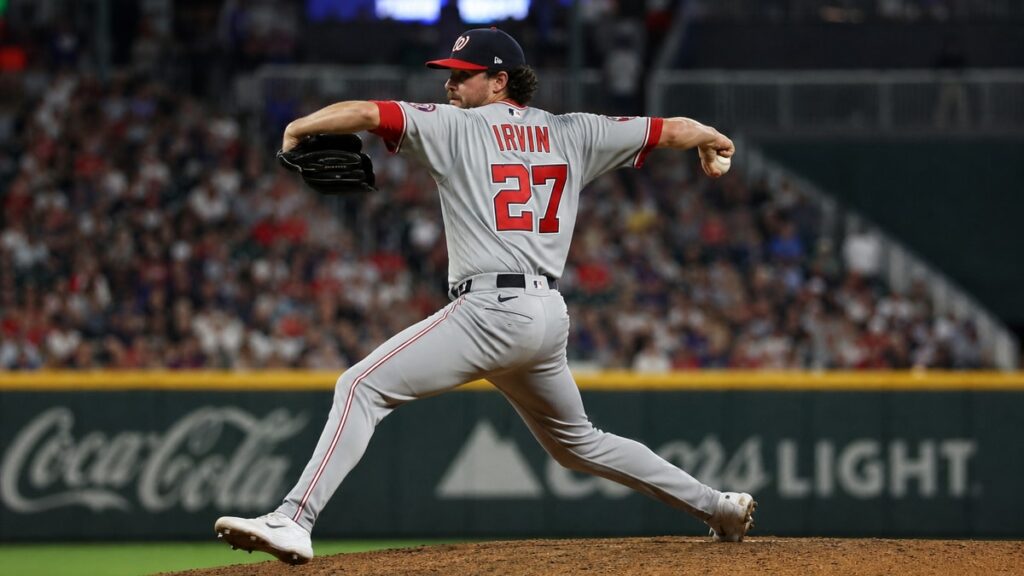
Jake Irvin is back on a big-league mound. The Washington Nationals activated the right-hander from the 60-day injured list on Thursday, and he took the ball that night in Atlanta against the Braves, marking his first major league appearance since a shoulder strain sidelined him in late May. It is a significant boost for a Nationals rotation that has weathered a rough stretch of injuries down the stretch of the season.
Irvin, 27, had emerged as one of Washington’s steadier rotation arms before the injury, sitting at 2-4 with a 5.23 ERA across 11 starts. He landed on the 15-day injured list on May 24 with right shoulder discomfort, and as his recovery dragged on, the Nationals transferred him to the 60-day IL to give themselves roster flexibility. Notably, the injury occurred during Washington’s previous series against Atlanta, adding a bit of symmetry to his return coming against the same opponent.
Shoulder injuries carry a different level of concern for pitchers than most other ailments, since the joint absorbs so much stress on every delivery and setbacks can linger or recur if a return is rushed. That reality shaped the Nationals’ entire approach to Irvin’s rehab, and it’s why the club took its time working him back up through the minor league system rather than pushing him straight back into a big-league rotation spot the moment he felt ready to throw.
A Clean Bill of Health Through Three Rehab Starts
Before getting the green light, Irvin had to prove his shoulder could hold up over three minor league rehab outings, and he did so emphatically. Across those starts he tossed 11 1/3 scoreless innings, striking out 12 batters against just one walk, with his pitch count topping out at 58 in his final tune-up. That workload management suggests the Nationals plan to ease him back in rather than stretch him out to a full complement of pitches right away, a common approach for pitchers returning from shoulder injuries given the added caution that arm requires compared to elbow or other lower-body setbacks.
Manager Blake Butera confirmed Wednesday that Irvin would start the series opener at Truist Park, going up against Atlanta right-hander Grant Holmes, who entered the night at 6-4 with a 3.79 ERA. The matchup carried extra intrigue given how well Irvin has historically pitched against the Braves — he entered with a 3-3 record and 3.56 ERA in nine career starts versus Atlanta, and his last outing against the Braves back in May was arguably his best of the season: five scoreless, no-hit innings with seven strikeouts before the shoulder issue ended his night early.
What Irvin’s Return Means for Washington’s Rotation
The Nationals entered the night at 55-54, sitting fourth in the NL East and trying to chip away at Atlanta’s cushion atop the division. Getting a healthy Irvin back gives Washington a fifth rotation piece it has sorely missed, and it comes on the heels of another significant arm rejoining the roster recently. To make room, the Nationals optioned reliever Paxton Schultz to the minors, filling out their 40-man roster without any further corresponding moves.
For bettors tracking the series, the return of a capable starter changes the complexion of Washington’s rotation depth for the stretch run, and it’s worth keeping an eye on how the MLB odds shift for Washington’s next few outings as the front office continues piecing its staff back together. Irvin’s workload will almost certainly stay limited in the near term — expect a shortened leash on his pitch count over his next couple of starts as the Nationals guard against any setback with the shoulder.
Beyond Thursday’s opener, the four-game set against Atlanta offers Washington a chance to measure itself against the division’s front-runner while getting a clearer picture of what its rotation looks like heading into August. If Irvin can pick up where he left off before the injury, it would mark one of the more encouraging developments of the Nationals’ second half, giving the club a proven arm capable of matching up with quality competition atop a lineup that has otherwise struggled for consistency all season. His leash figures to be short given how much time he has missed, but for a team still fighting for positioning in a crowded NL East, any reinforcement to the pitching staff carries real weight down the stretch.