
Building a dynasty roster from scratch in 2026 comes down to one question: how many years of prime production can you actually bank on, and right now the answer for the top of these rankings is unusually long.
Quick take:
- Top name: Bijan Robinson
- Why: A workhorse role in Atlanta at 24 years old is the rarest combination in dynasty startups
- The number to watch: Jeremiyah Love went third overall to Arizona and signed a four-year, $53 million rookie deal — the richest guarantee ever given to a running back
Startup drafts reward patience and youth over name recognition, and the 2026 landscape is stacked with young stars who’ve already proven it on the field rather than just flashed potential in college. The gap between the true first tier and everyone else is wide this year, which makes the first two or three picks in any startup draft matter more than usual.
There’s also a rookie class headlined by a running back who arrived with as much hype as any non-quarterback prospect in recent memory, plus a group of ascending wideouts who are forcing dynasty managers to rethink how quickly rookie receivers can produce.
Bijan Robinson Anchors Every Single-QB Build
Robinson has settled into the workhorse role in Atlanta that dynasty managers hoped for when he was drafted, and he now sits at the top of most single-quarterback dynasty boards. He’s just 24, already commands a massive workload, and touches the ball enough in the passing game to keep his floor high even in weeks the Falcons lean run-heavy. In startup formats, running backs who combine age, opportunity, and receiving work like this are the scarcest asset on the board, and Robinson checks every box.
Right behind him sits a tight cluster of Ja’Marr Chase, Jaxon Smith-Njigba, and Jahmyr Gibbs. Chase remains the model alpha receiver in Cincinnati, Smith-Njigba has emerged as one of the most efficient route runners in the league in Seattle, and Gibbs continues to pair explosive big-play ability with a real role in Detroit’s passing game that also fuels the Lions’ Super Bowl odds. Any of the three is a defensible 1.01 depending on team need, and none of them come with meaningful risk attached.
Jeremiyah Love Headlines a Loaded Rookie Class
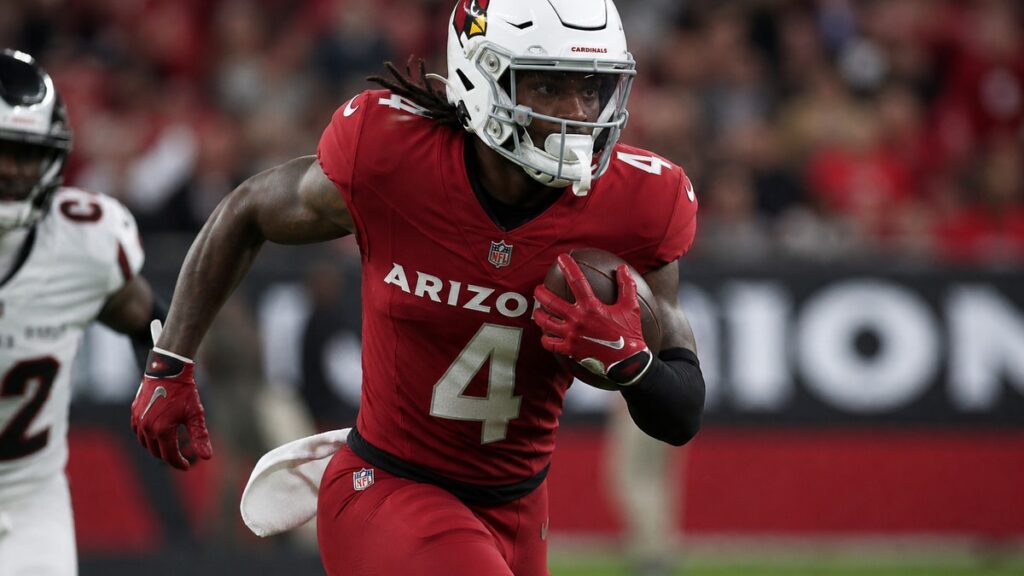
No rookie changed more dynasty startup boards this offseason than Jeremiyah Love. The Notre Dame product went third overall to the Arizona Cardinals in the 2026 NFL Draft, and the team backed that pick up by handing him a four-year, $53 million contract — the largest guarantee ever given to a running back at the rookie level. That’s the kind of investment that all but guarantees an opportunity as a lead back from day one, and dynasty managers have responded by slotting him ahead of every rookie at any position.
Love isn’t the only rookie worth chasing early. Carnell Tate and Jordyn Tyson both enter startup conversations as the top wide receivers from this class, giving dynasty managers a genuine three-player tier of rookies worth a first-round startup pick even in single-QB leagues, and both were popular names in this year’s NFL futures markets before the draft even happened. Ashton Jeanty, now firmly entrenched as Las Vegas’s lead back, has already validated last year’s hype with a real role and remains one of the safer building blocks at running back for a team that isn’t quite ready to win now.
The Receiver Depth Changes How You Draft the Middle Rounds
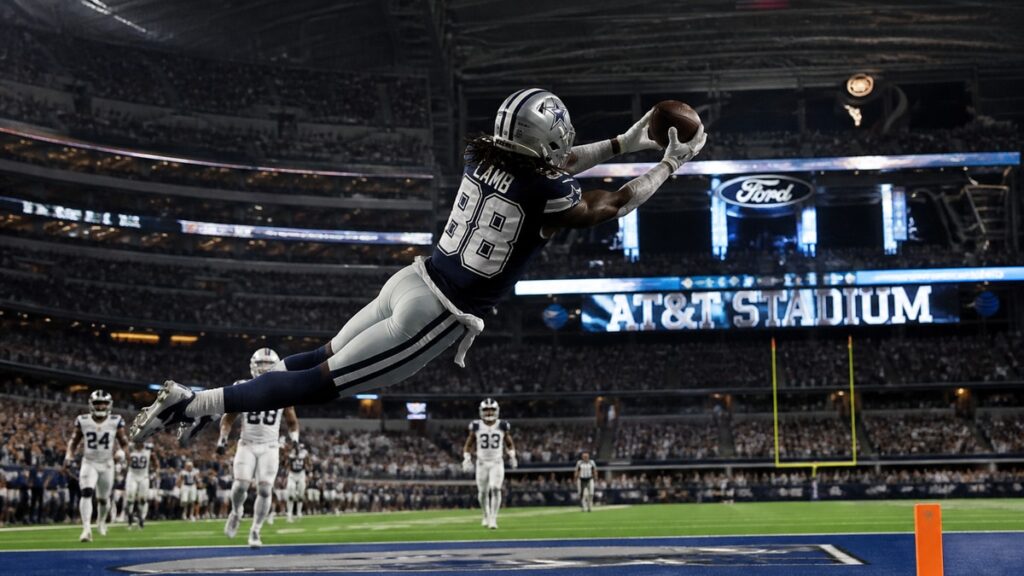
Where this rankings cycle really separates from past years is receiver depth. Amon-Ra St. Brown, Justin Jefferson, CeeDee Lamb, and Malik Nabers all remain top-15 dynasty assets, and the position keeps producing younger names — Drake London, Nico Collins, and Tetairoa McMillan among them — who are just entering their prime years. That depth means managers building a startup roster don’t need to reach for a shaky running back just to fill the position; there’s a viable, productive wide receiver available several rounds later than in past cycles.
The three-way gap at running back between elite workhorses like Bijan Robinson and committee backs further down the board is now the single biggest value swing in dynasty startups.
Tight end also deserves a mention. Brock Bowers has established himself as a true weekly difference-maker in Las Vegas, and Trey McBride has climbed into the TE1 conversation in Arizona behind a heavy target share. Either one is worth reaching for a round early rather than waiting on the position, since the drop-off after the top two or three tight ends remains steep.
Quarterback strategy still depends entirely on league format. In single-QB startups, it’s correct to let quarterbacks fall and load up on skill position talent instead. In superflex leagues, that calculus flips entirely — Josh Allen, Lamar Jackson, and Drake Maye all belong in true first-round conversations, since a second passer on the roster becomes a lineup necessity rather than a luxury.
The Bottom Line
Startup success in 2026 comes down to prioritizing young, workhorse-level backs and true alpha receivers over speculative upside, then using the deep receiver pool to fill out the middle rounds without panic.
- Bijan Robinson, Ja’Marr Chase, and Jahmyr Gibbs form the clearest top tier in single-QB formats
- Jeremiyah Love is the rookie to build around after his blockbuster landing spot in Arizona
Draft the sure things at the top, trust the receiver depth in the middle, and let the format dictate exactly how early to grab a quarterback.