
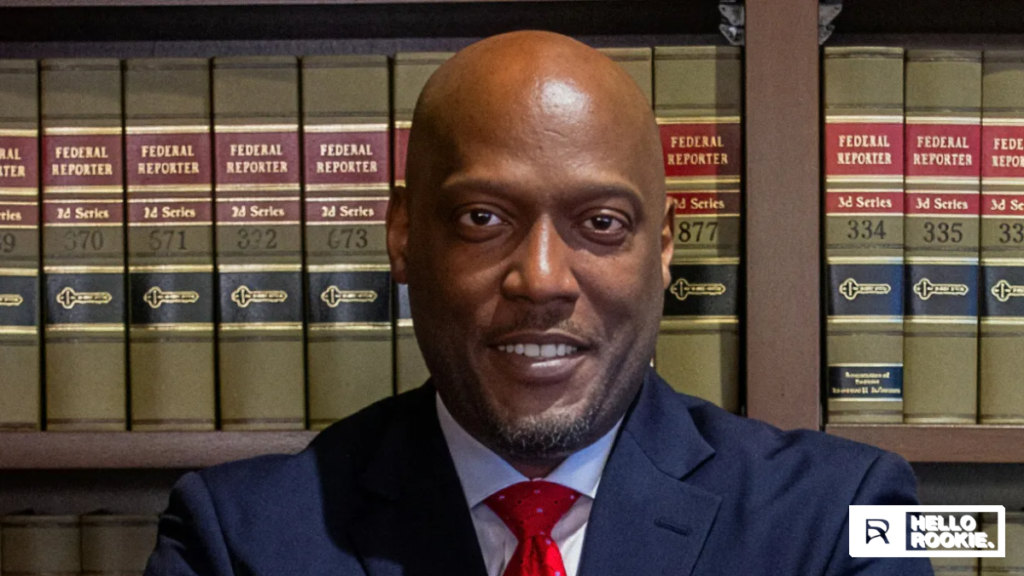
A federal judge in Connecticut has dealt Kalshi another legal setback, denying the prediction market operator’s request for a preliminary injunction against the state’s gambling regulators. The ruling, issued Monday by U.S. District Judge Vernon D. Oliver of the District of Connecticut, clears the way for the state’s Department of Consumer Protection to move forward with enforcement against Kalshi’s sports event contracts.
Kalshi sued Connecticut regulators earlier this year after the state’s Department of Consumer Protection issued a cease-and-desist order targeting its sports-related contracts, arguing the products are federally regulated derivatives rather than gambling products subject to state oversight. Oliver’s decision rejects that argument, at least for now, and adds Connecticut to a growing list of jurisdictions where courts have sided against the company.
Why the Judge Ruled Against Kalshi
At the center of the ruling is whether Kalshi’s sports event contracts qualify as “swaps” under the Commodity Exchange Act (CEA) — a designation that would place them under the exclusive jurisdiction of the Commodity Futures Trading Commission (CFTC) and shield them from state-level gambling regulation. Oliver found they do not.
“Kalshi’s sports-event contracts fail to satisfy this portion of the statutory definition of a swap because they do not depend on whether an underlying sporting event occurs, fails to occur, or occurs to a particular extent,” Oliver wrote in his decision. “Instead, Kalshi’s sports-event contracts depend on the event’s outcomes or discrete in-game occurrences. Treating those outcomes as separate ‘events’ would depart from the ordinary meaning of the term.”
Oliver went further, ruling that even if the contracts were properly classified as swaps, Connecticut’s gambling laws still would not be preempted by federal law. He noted that Kalshi “has not demonstrated that it is likely to succeed” in arguing either point, and also rejected the company’s claims of irreparable harm and consumer disruption if its sports contracts were pulled from the state.
Part of a Bigger, Messier Fight
The Connecticut decision lands amid an escalating, increasingly fractured legal battle between Kalshi and state regulators over whether its event contracts are legitimate financial derivatives or sports betting products operating without a license. Courts around the country have split sharply on the question. The Third Circuit Court of Appeals sided with Kalshi in April, ruling that its contracts qualify as CFTC-regulated swaps and that federal law preempts New Jersey’s gambling statutes. Tennessee’s federal court reached a similar conclusion in Kalshi’s favor earlier this year.
But the company has also lost significant ground in other states. Nevada, Michigan, and Washington have each moved to shut down some or all of Kalshi’s sports contract offerings through separate litigation, and New York’s attorney general filed suit at the end of July alleging the platform is running an illegal, unlicensed gambling operation. The CFTC, for its part, has taken the opposite side of several state regulators, suing Arizona, Connecticut, and Illinois directly in an attempt to block state enforcement actions against Kalshi and similar platforms.
Monday’s ruling does not immediately shut Kalshi’s sports contracts down in Connecticut — it simply removes the injunction that had been blocking the state from acting while the underlying case played out. A Kalshi spokesperson said the company “respectfully disagree[s] with the Court’s decision” and is “considering all legal options,” signaling an appeal is likely. Connecticut’s Department of Consumer Protection had originally issued cease-and-desist orders in December to three prediction market operators — Kalshi, Polymarket, and Crypto.com — before Kalshi sought and won a temporary hold on enforcement while its injunction request worked through the court.
Oliver’s opinion leaned heavily on the idea that sports wagering has long been an area of traditional state authority, and that Congress has not clearly signaled an intent to strip states of that power just because a company routes its product through a CFTC-registered exchange. He wrote that the CFTC is “an agency that has not historically regulated sports wagering and has not exercised meaningful oversight over Kalshi’s sports event contracts,” undercutting the company’s central premise that federal law occupies the field.
What Comes Next
With enforcement actions, injunction rulings, and appeals now stacking up across more than a dozen states, the underlying jurisdictional question — federal versus state authority over sports-based event contracts — remains unresolved nationally. Legal observers expect the issue could eventually require intervention from the Supreme Court or a definitive stance from Congress to settle the split between circuits. For now, Connecticut becomes the latest battleground in a fight that shows no signs of slowing down, with regulators in multiple states watching closely to see whether Oliver’s reasoning gets picked up elsewhere.
As more states weigh their own sports betting frameworks against the rise of prediction markets, bettors are left to sort through a patchwork of rules that can differ dramatically depending on where they live.