
HISA’s enforcement arm has filed a banned substance charge against Fair Hill-based trainer Angel Quiroz after his 4-year-old filly Bonita Rough tested positive for albuterol. The Horseracing Integrity and Welfare Unit says the positive came from a sample collected July 10, and Quiroz has waived his right to a B-sample analysis while failing to provide what HIWU considered a sufficient explanation.
The finding lands in the middle of a much larger integrity storm surrounding Quiroz’s barn. He is one of two trainers, along with Ernesto Ochoa, at the center of a Horseracing Integrity and Safety Authority investigation into a group of horses that shipped in from Fair Hill Training Center and produced a run of stunning form reversals on Aug. 9.
The Fair Hill Five and a Six-Figure Coup
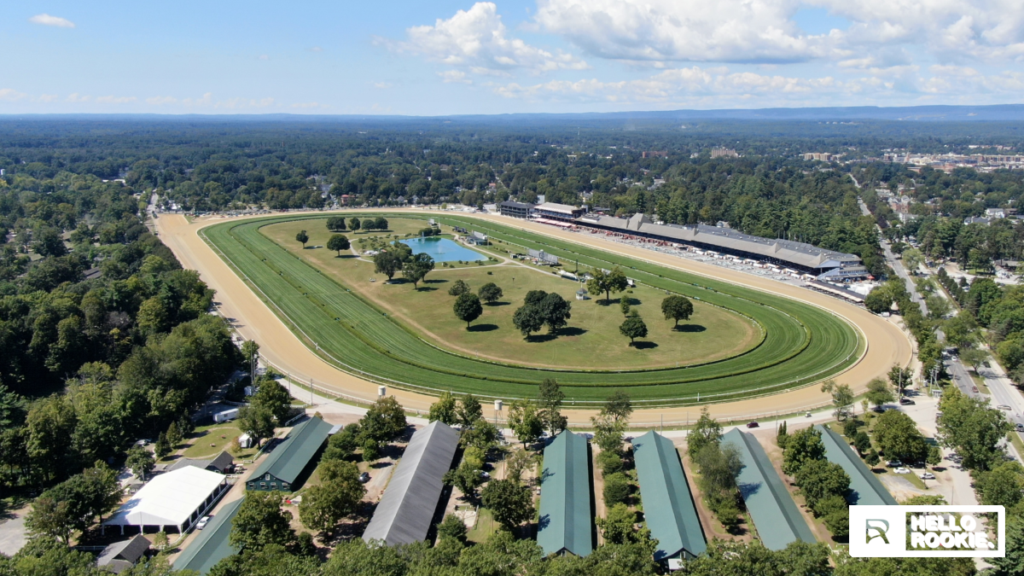
Four of five horses tied to Quiroz and Ochoa won their races that day — two apiece at Saratoga Race Course and Monmouth Park — after each had been away from the races for months. Quiroz saddled The Great Amira, who won by nine lengths at odds of 17-1 at Monmouth, then followed it up in the very next race with Tepeyac, a half-length winner at nearly 4-1. Ochoa, meanwhile, won with Classic Rock and M B’s Melanie Cares at Saratoga, both of whom led wire-to-wire at long prices.
The payouts raised immediate red flags. A $1 daily double linking the two Monmouth winners returned just $12.80, even though the horses individually paid $37.20 and $9.60 to win — numbers that didn’t add up for sharp bettors and handicappers who flagged the discrepancy on social media the same day. The New York Racing Association referred the situation to HISA, HIWU, and the Thoroughbred Racing Protective Bureau. Racing Post later reported the sequence produced a six-figure betting coup at British bookmaker shops, with one source telling BloodHorse the liability across those shops may have reached £600,000-£800,000.
Bonita Rough’s Positive Adds to the Pressure
Bonita Rough was not among the horses that raced Aug. 9, but her positive test — for the injectable form of albuterol, a bronchodilator that becomes a banned substance under HISA’s Anti-Doping and Medication Control Program when administered by any route other than inhalation — gives investigators a second thread to pull on. She was tested while on the vets’ list, and HIWU noted her connection to the broader case runs deeper: she’s a full sister to Bravo Rough, another former Quiroz-trained horse that was scratched in the paddock at Mountaineer Casino Racetrack & Resort after West Virginia stewards were alerted to her similar Fair Hill connections. HISA does not currently have jurisdiction in West Virginia but flagged the situation to state regulators anyway.
Quiroz has denied any wrongdoing tied to the Aug. 9 races, telling Thoroughbred Daily News that he simply ran his horses and won. He now faces a hearing before a neutral arbitrator over the albuterol charge specifically, separate from the ongoing investigation into the betting patterns. HIWU said any additional test results for Quiroz-trained horses will be disclosed as the ADMP process dictates, and neither HIWU nor HISA is commenting further while the broader investigation continues.
Why the Timeline Matters
The albuterol positive predates the Aug. 9 races by nearly a month, which is notable given how the broader case has unfolded. It shows Quiroz was already on HIWU’s radar over medication compliance before the betting-pattern concerns ever surfaced publicly. Investigators now have two separate tracks to work: the performance-based questions raised by handicappers and bettors around the Monmouth and Saratoga winners, and a standalone doping violation tied to a horse that wasn’t even part of that sequence. Whether the cases end up connected in any formal sense is unclear, but together they paint a picture of a barn under sustained scrutiny from multiple angles at once.
HIWU’s process from here follows a standard track. Because Quiroz waived the right to have the B sample independently tested and didn’t offer an explanation HIWU found adequate, the case moves toward a hearing in front of a neutral arbitrator, who will determine any penalty under the Anti-Doping and Medication Control Program. Albuterol’s status as a banned substance — rather than a controlled therapeutic medication — stems from its history of abuse as a muscle-building agent when given by injection rather than inhalation, which is why HISA treats a positive at any concentration as a violation.
What Comes Next
Fair Hill Training Center, where Quiroz and Ochoa were both based, has already opened its own review and said it will cooperate fully with HISA. The facility’s board has the authority to evict trainers found to have violated its rules, a step that would carry significant consequences given Fair Hill’s role as one of the mid-Atlantic’s premier training grounds. NYRA, for its part, has said little publicly beyond confirming its referral to HISA, HIWU and the Thoroughbred Racing Protective Bureau, leaving the day-to-day investigative work to those integrity bodies.
For now, no formal finding has been made connecting Quiroz or Ochoa to any wrongdoing in the Aug. 9 races themselves — that inquiry remains open, and HISA has repeatedly said it won’t speculate on outcomes while testing and evidence review continue. The Bonita Rough case is a different matter: a specific charge, tied to a specific sample, moving toward a specific hearing. It’s the first concrete regulatory action to come out of a saga that started with a few suspicious payouts and a social media post questioning them.
For bettors tracking the fallout, the episode is a reminder of how closely regulators and sportsbooks now monitor unusual line movement and payout anomalies — the same data-driven scrutiny that shapes daily sports betting odds markets well beyond the racetrack.