
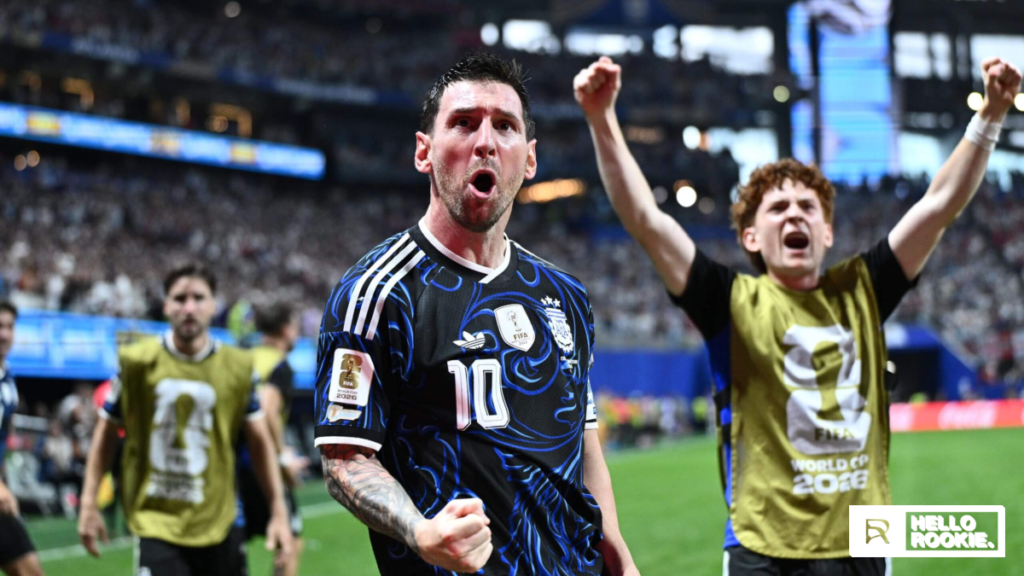
Kalshi added 3 million new users during the 2026 FIFA World Cup, with more than $1.2 billion traded on the platform’s contract predicting the tournament’s eventual winner. The figure marks a record for a single market on the prediction market platform, which closed the contract Sunday after Spain defeated Argentina in the final.
The surge underscores how quickly prediction markets have moved from a niche corner of finance into mainstream sports culture, riding the same wave of attention that drives Kalshi’s regulatory battles with state gambling authorities.
A Marketing Blitz Built Around the World Cup
Kalshi leaned hard into the tournament’s global reach to fuel the growth. CNBC reported that Vijay Viswanathan, Associate Dean of Integrated Marketing Communications at Northwestern University, pointed to soccer’s universal footprint as the driver. “I don’t think there’s any game like football,” he said. “It’s played in about every country in the world … so in just terms of the total addressable market, there’s really nothing that comes close to the FIFA World Cup.”
The company partnered with ADI Predictstreet, the tournament’s official prediction market sponsor, for co-branded advertising inside stadiums, and teamed with OpenAI to surface Kalshi’s contract odds when users searched for World Cup matches on ChatGPT. Kalshi also built campaigns around Croatian star Luka Modric and longtime Real Madrid coach José Mourinho, plus a partnership with the Argentina national team that landed a mention from Lionel Messi on Instagram.
Kalshi CEO Tarek Mansour, who oversees the company’s marketing strategy directly, said speed was central to the approach. “Our volumes are where the news is at,” Mansour said. “It’s a lot of the approach for the World Cup. … The most important thing is to enable creativity based on what’s happening.” He cited an advertisement featuring former professional players in a scrimmage — released Friday and produced within 24 hours — as an example of that turnaround.
The marketing push extended well beyond soccer. Kalshi ran a campaign with actor Timothée Chalamet in June tied to his appearances at New York Knicks games during the NBA Finals, and released a spot with Colombian singer J Balvin this month. Elizabeth Johnson, Executive Director of the Wharton Neuroscience Initiative at the University of Pennsylvania, said the strategy is about reach beyond core bettors. “This is also a way for them to say, ‘oh, but we’re also relevant to all these other people who might not be that interested in sports, too,'” Johnson said. “They’re seizing this moment to remind people about the ubiquity of what these prediction markets are.”
Regulatory Fight Over Sports Contracts Persists
The World Cup’s record volume arrives as sports event contracts remain a flashpoint between federal and state regulators. State officials argue the contracts function as sports betting, an activity that falls under state jurisdiction rather than federal oversight. Kalshi maintains that the Commodity Futures Trading Commission, which regulates swaps and derivatives, holds sole authority over prediction markets. Mansour dismissed the pushback as coming from gambling companies worried about losing market share.
Now Kalshi faces a different challenge: keeping the millions of new sign-ups engaged once the tournament buzz fades. Trading volume on non-match days has already trailed the volume seen during games. Mansour said that pattern tracks with what Kalshi has observed after previous major events — a spike, a temporary dip, then a climb back up around the next news cycle. “You have to believe there’s not going to be any news after Sunday,” he said. “Maybe, … but the more probable thing is that there’s going to be like a bunch of things going on in the world, and Kalshi’s going to be there to service it.”
What It Means for the Prediction Market Boom
The World Cup numbers give Kalshi its clearest evidence yet that a single live sporting event can move the needle on user growth at a scale usually reserved for major platform launches. For bettors who split time between traditional DraftKings promo code offers and prediction markets, the tournament may have been the first moment the two worlds felt genuinely comparable in scale. Whether Kalshi can convert World Cup-driven curiosity into habitual daily trading — rather than a one-time spike tied to a single bracket — will likely shape how the company approaches its next marketing push around a major event, from the NFL season kickoff to next year’s world championships across other sports.