
Hours before Spain and Argentina kicked off the World Cup final in East Rutherford, New Jersey, the head of Europe’s top human rights body fired off an open letter accusing FIFA of letting money and political pressure erode the integrity of the tournament. Alain Berset, secretary general of the 46-nation Council of Europe, urged FIFA to build a real integrity framework before the 2030 World Cup kicks off in Spain and Portugal.
Berset’s letter didn’t mince words. “The next crisis has already begun. It has two names: money and power,” he wrote, addressing FIFA president Gianni Infantino directly. The timing was pointed — the letter landed the same day as the biggest match of the tournament, and just weeks after the first 48-team, 104-game World Cup wrapped up a run marked by controversy both on the field and around FIFA’s expanding commercial deals.
The Balogun Ban That Sparked the Fight
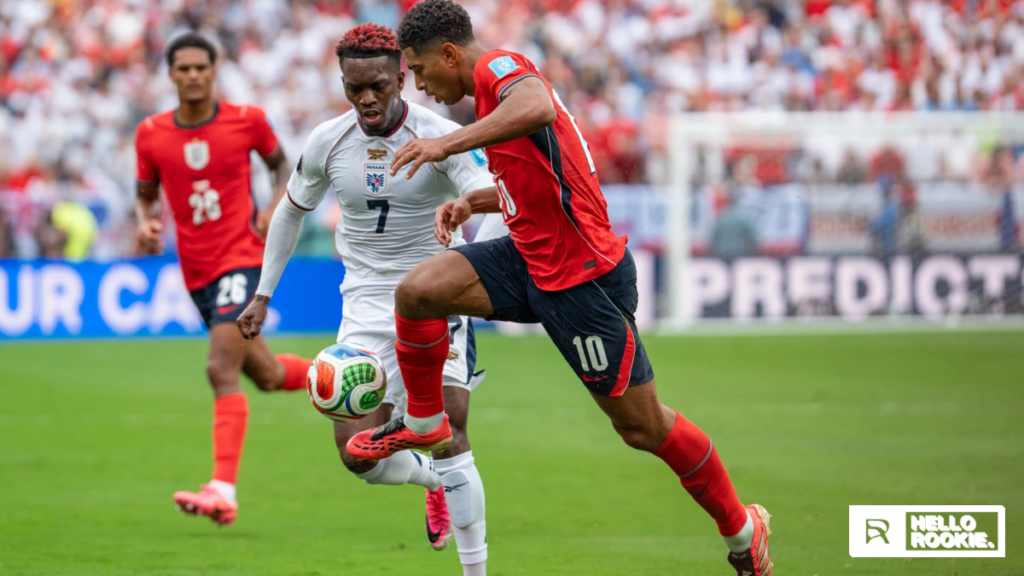
At the center of Berset’s complaint is the case of United States forward Folarin Balogun, who was hit with a mandatory one-game suspension before FIFA abruptly suspended the ban, clearing him to face Belgium in the quarterfinals. Belgium went on to win that match 4-1, but the disciplinary reversal drew immediate backlash. UEFA said the decision “crossed a red line” in soccer’s rule of law, and FIFA has still not released documents explaining the reasoning behind its disciplinary judge’s ruling.
Berset connected the dots to outside political pressure, alleging the suspension came “after a head of state called the president of FIFA,” a reference to reported pressure from U.S. President Donald Trump. “When the rules bend under pressure, every result is open to doubt,” Berset wrote. “Political influence has also moved onto the field.”
Prediction Markets Add a New Layer of Risk
Berset’s letter also zeroed in on FIFA’s growing relationship with the prediction markets industry. In April, FIFA named ADI Predictstreet — a company backed by Abu Dhabi’s International Holding Co. and licensed in Gibraltar — as its first-ever Official Prediction Market Partner, in a deal reportedly worth around $150 million. Kalshi later struck its own roughly $20 million co-branding arrangement with ADI Predictstreet to get its logo into World Cup stadiums alongside sponsors like Coca-Cola and Adidas.
Berset argued that prediction markets built around micro-outcomes create fresh openings for manipulation, since bettors can win money “on moments a single player can produce without changing the score.” That’s a familiar concern for anyone who follows live sports betting odds stateside, where regulators and sportsbooks alike have wrestled with prop bets and in-play markets tied to isolated plays rather than final results. “It is an open door to fraud,” Berset wrote. “And this World Cup has opened the door wider.”
A Formal Partnership Turned Public Rebuke
What makes the letter notable is that the Council of Europe has had a formal working relationship with FIFA since 2018, when Infantino signed a memorandum of understanding pledging shared commitments to “transparency, accountability, integrity, safety in sport and respect for human rights.” Airing this criticism publicly, rather than through private channels, signals just how seriously Berset views the stakes heading into the next cycle.
Beyond the Balogun ruling and the prediction market ties, Berset’s letter cited “the authority of referees called into question” and racist abuse directed at players — including from elected officials — as additional red flags from this tournament. He closed with a direct proposal: a working dialogue with FIFA “that starts tonight, to build the integrity framework of the 2030 World Cup before it is played.”
What It Means Heading Into 2030
The 2030 World Cup will be a sprawling, multi-continent affair, staged primarily across Spain, Portugal and Morocco, with Argentina, Paraguay and Uruguay each hosting a single centenary match to honor the tournament’s 1930 origins in Uruguay. That scale — paired with FIFA’s increasingly aggressive expansion into new sponsorship categories like prediction markets — is exactly why Berset wants guardrails established well ahead of time rather than negotiated match by match.
For bettors and fans following the sport’s growing overlap with wagering and prediction markets, the episode is a reminder that regulatory scrutiny isn’t going away as these products scale globally. Whether FIFA responds to Berset’s proposal — or waits until the next controversy forces its hand — will say a lot about how seriously the sport’s governing body takes integrity heading into the next decade.