
The 2026 college football season is still more than a month away from kickoff, but that has never stopped anyone in this sport from playing bracketologist. With a new-look automatic qualifier structure in place and a stacked group of contenders returning from a chaotic 2025 campaign, the guessing game over who fills out the 12-team College Football Playoff field is already in full swing. Every major outlet from ESPN to CBS Sports to Athlon Sports has rolled out its own projection, and while the names at the top look familiar, the paths to get there are anything but settled.
This preview digs into the format tweaks that will shape the race, breaks down who the CFP oddsmakers and prognosticators view as the current locks, and identifies the bubble teams and dark horses who could scramble the picture between now and Selection Sunday in December. If you like to bet early and often on national title futures, this is the time of year those numbers actually move the most.
The CFP Format Isn’t Changing, But the Bids Are
After the Big Ten and SEC spent the offseason publicly sparring over the sport’s future — the Big Ten pushing for a bloated 24-team model with automatic qualifiers baked in, the SEC countering with a “5+11” 16-team proposal — the two sides couldn’t get on the same page. The result: the College Football Playoff will stay at 12 teams for 2026, giving the Management Committee more time to hash out a long-term structure. CFP executive director Rich Clark confirmed the decision, framing it as a chance to “review the 12-team format” before committing to anything bigger.
What has changed is how those 12 spots get handed out. In year one and two of the expanded playoff, the five highest-ranked conference champions — regardless of league — earned automatic bids. That system blew up in spectacular fashion when a five-loss Duke team upset a top-15 Virginia squad in the ACC Championship Game, only for Duke to finish unranked and get passed over in favor of multiple Group of Six champs. The fallout led directly to this year’s fix: each Power Four conference champion (ACC, Big Ten, Big 12, SEC) now gets a guaranteed bid no matter where they’re ranked, and the highest-ranked Group of Six team — conference champion or not — takes the fifth automatic spot. Notre Dame, still holding out as an independent, is guaranteed a bid of its own if the Irish finish anywhere in the final top 12. The remaining seven spots go to the best at-large teams left on the board, and seeding stays straight by ranking, with the top four teams getting first-round byes.
Translation for bettors and fans: conference championship games matter enormously again, a one-loss Power Four team that stumbles in its title game is in far less danger than it used to be, and the Group of Six race for that single automatic bid is going to be must-watch television in late November.
The Projected Top Seeds: Who Looks Like a Lock
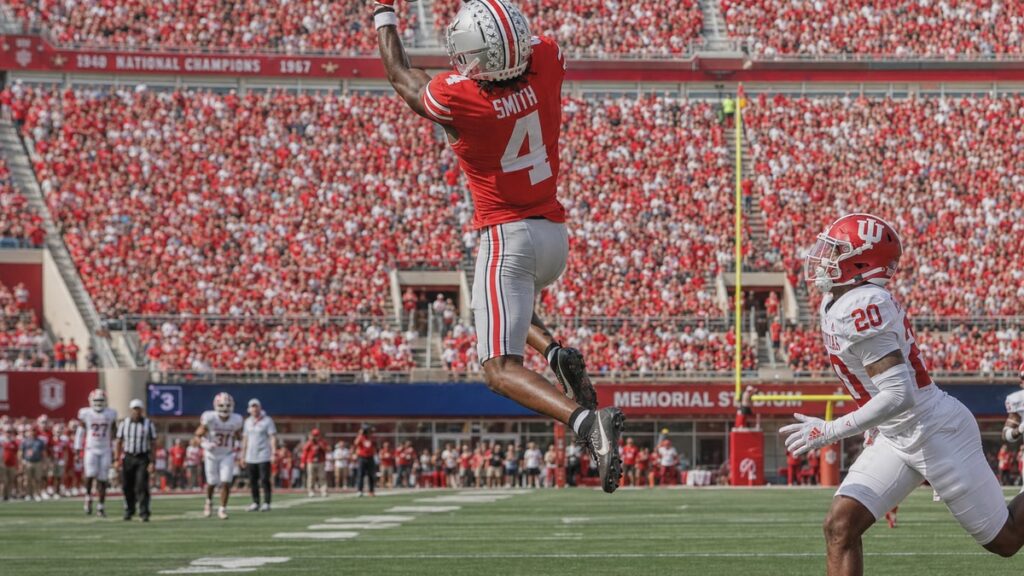
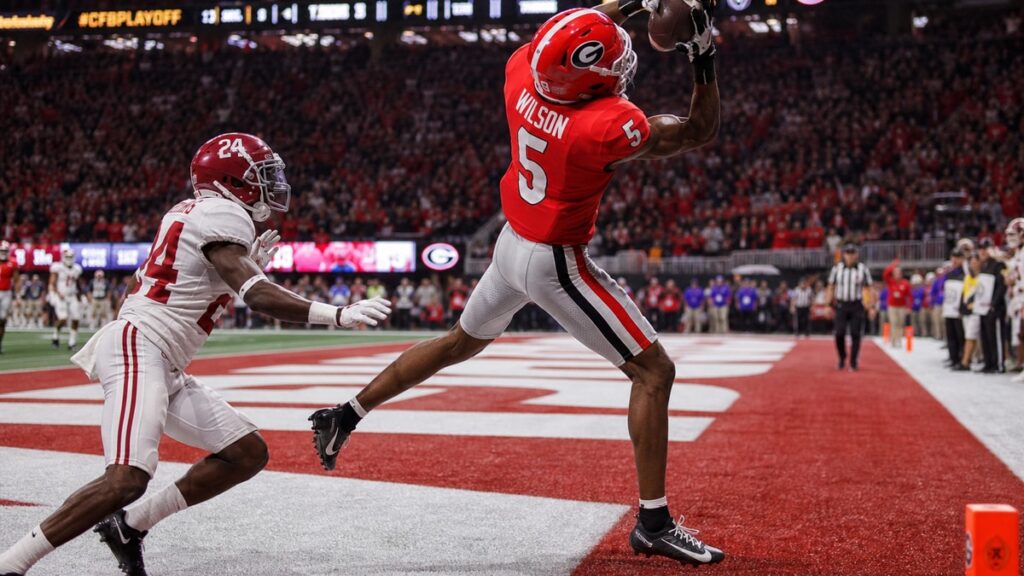
Across the major early projections, a handful of programs keep showing up near the top of the bracket. Ohio State enters as the defending national champion and is being projected by Athlon Sports as the Big Ten favorite and a No. 1 overall seed contender. Georgia, as usual, is penciled in as the SEC favorite in most of these exercises, setting up a potential Ohio State-Georgia rematch at the top of the sport that would headline any way-too-early championship odds board.
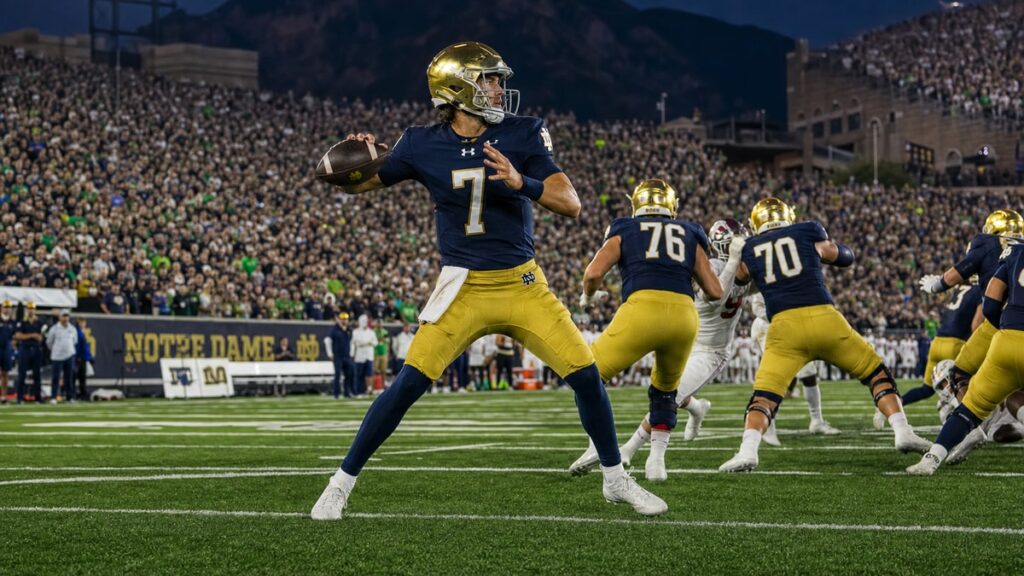
Texas is the other team drawing top-three buzz across the board, with the Longhorns’ talent level under Steve Sarkisian still considered championship-caliber even after a turbulent 2025. Indiana, fresh off a breakthrough playoff run that legitimized Curt Cignetti’s program as more than a one-year wonder, keeps showing up in the top four or five of nearly every projection, a testament to how quickly the Hoosiers have reshaped the Big Ten’s pecking order. Notre Dame remains in the mix as well, with the Irish projected as a likely top-six team even before accounting for their guaranteed-bid safety net.
Rounding out the group that shows up in nearly every projection: Oregon, Miami (projected by multiple outlets as the ACC’s likely representative), and Texas Tech, which keeps getting tabbed as the Big 12’s probable champion behind a roster loaded with transfer portal additions. Texas A&M, Oklahoma, and LSU also appear regularly in the 7-11 range, giving the SEC a realistic shot at placing four or five teams in the field if the top of the conference holds form. On the Group of Six side, Boise State is the name analysts keep circling as the highest-ranked team likely to claim that automatic bid, continuing the Broncos’ recent run as the sport’s most reliable non-power program.
Bubble Teams and Contenders Worth Watching
Behind the projected top 12, there’s a thick layer of teams that analysts consider very much alive for a playoff berth depending on how the season breaks. Ole Miss, Michigan, USC, Alabama, BYU, Washington, Penn State, Houston, Utah, Tennessee, SMU, Louisville, Iowa, Florida, and Clemson all show up on Athlon’s “next tier of contenders” list, which tells you just how deep the sport’s talent pool runs heading into the season. Any of those programs going 10-2 or better with a signature win could easily leapfrog a stumbling projected favorite.
On the Group of Six side, keep an eye on Navy, Western Kentucky, Miami (Ohio), UNLV, and James Madison as the projected conference champions most likely to make a real push, with Memphis, UTSA, Army, Tulane, Liberty, and Hawaii lurking as programs capable of crashing that conversation if the top-ranked G6 team stumbles. Given that the automatic Group of Six bid now goes strictly by CFP ranking rather than requiring a conference title, an undefeated or one-loss team from that tier that simply plays a tougher-than-usual schedule can vault into the field even without hoisting a trophy.
How the Season Could Actually Shake Out
The single biggest swing factor in this year’s format is exactly what tripped up the committee last season: a shaky conference champion. Because every Power Four league champ is now guaranteed a bid regardless of record, there’s real potential for a two-loss or three-loss team to steal a spot that would have gone to a “more deserving” at-large team under the old rules. That makes conference championship weekend, and specifically the ACC and Big 12 title games, potentially even more chaotic than usual — a shocking upset there no longer risks bumping the winner out of the field, which could embolden upset-minded underdogs and complicate the at-large math for everyone else.
It also means the SEC and Big Ten, the two deepest conferences, are fighting over a smaller number of guaranteed spots than their overall strength would suggest, which historically has pushed committee members toward loading up on at-large bids from those leagues anyway. Expect the SEC in particular to push for four or five total bids again this year, with Georgia, Texas, Texas A&M, Oklahoma, LSU, Alabama, and Tennessee all realistically in range of a playoff berth depending on how the schedule shakes out.
If you’re looking to get a number down early, sportsbooks already have CFB Championship futures markets up on which teams will win it all, and national championship odds tend to carry real value in July and August before public money floods in on the preseason favorites. Keep tabs on those lines throughout fall camp — they’ll tell you just as much about how Vegas views this race as any bracketology exercise will.